

VitaCoreBalance Editorial Team | Research-based health content · Editorial review process | April 2026
Collagen Benefits: How This Structural Protein Supports Skin, Joints, and Metabolic Health
Collagen is one of the most abundant proteins in the human body, playing a central role in maintaining the strength and integrity of connective tissues. While it is often associated with skin health and anti-aging, collagen also supports joint function, gut integrity, muscle maintenance, and overall metabolic resilience.
Understanding collagen benefits requires looking beyond cosmetic outcomes. Collagen production and breakdown are influenced by nutrition, hormones, inflammation, sleep, and metabolic activity—making it a truly system-wide component of health. These connections highlight why collagen status intersects with areas like Metabolism, Nutrition, and Hormone Health, as well as Gut Health, Weight Loss, and Sleep Health.
What Is Collagen?
Collagen is a structural protein found in skin, bones, muscles, tendons, ligaments, and connective tissues. It provides strength, elasticity, and structural support throughout the body.
There are at least 28 types of collagen, but the most important for human health include:
- Type I — skin, bones, tendons, ligaments
- Type II — cartilage and joint support
- Type III — skin, blood vessels, organs
- Type IV — basement membranes (tissue barriers)
- Type V — hair, placenta, and cell surfaces
Collagen is made from amino acids—primarily glycine, proline, and hydroxyproline—and requires nutrients like vitamin C, zinc, and copper for proper synthesis. This makes dietary intake and nutrient status critical factors, linking collagen production directly to Nutrition and overall Metabolism.
How Collagen Works in the Body
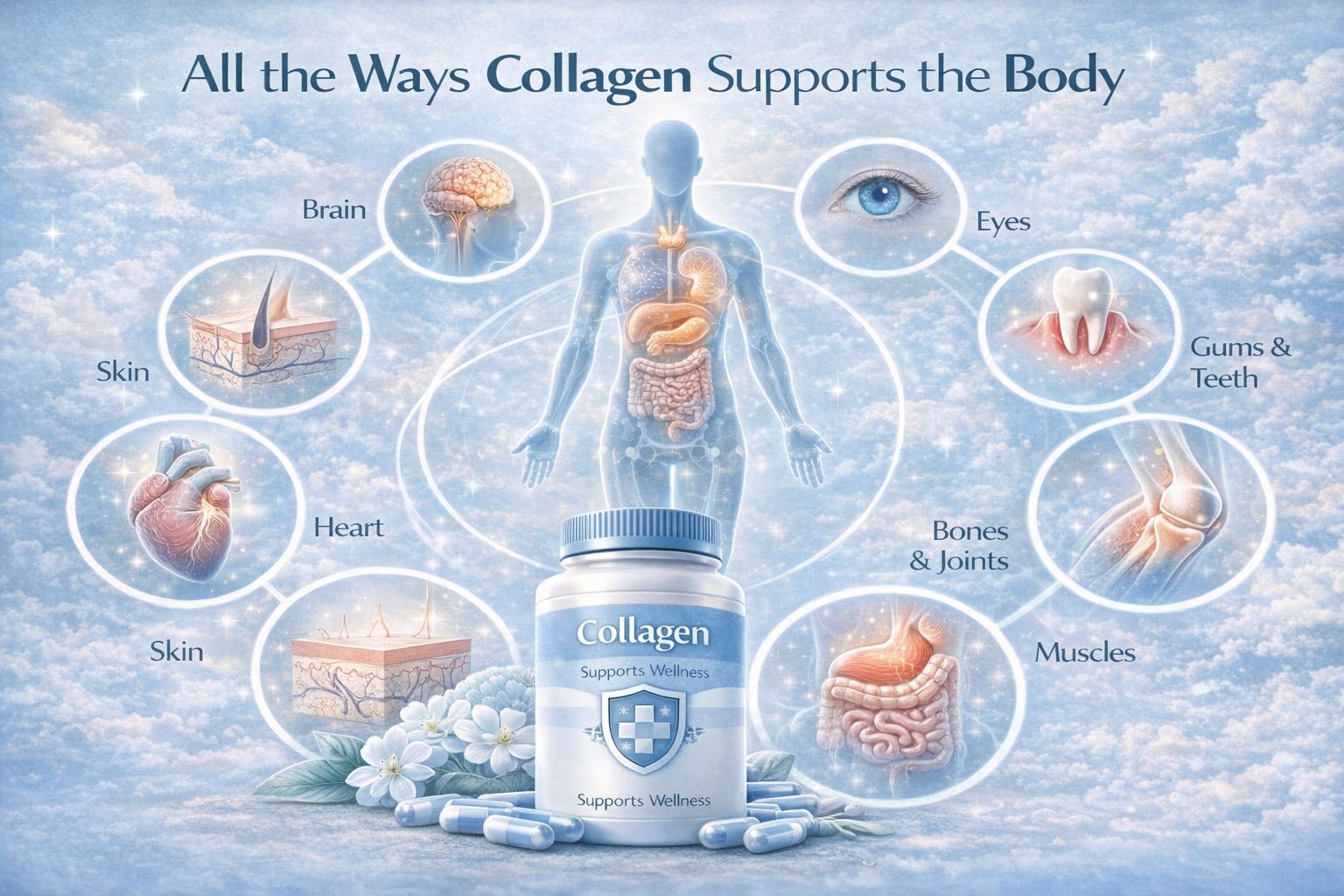
Collagen functions as the body’s internal scaffolding. It forms fibers that give tissues structure, flexibility, and durability. These fibers are continuously broken down and rebuilt in a process known as collagen turnover.
Key physiological roles include:
Structural support
Maintains the integrity of skin, bones, and connective tissues.
Joint cushioning
Supports cartilage and helps absorb mechanical stress.
Gut barrier integrity
Helps maintain the lining of the digestive tract.
Muscle and metabolic support
Provides amino acids needed for tissue repair and metabolic function.
Skin elasticity and hydration
Supports dermal thickness and reduces visible signs of aging.
Collagen synthesis naturally declines with age, typically beginning in the mid-20s and accelerating after age 40. Hormonal changes—particularly declines in estrogen—can further reduce collagen production, which explains why collagen loss is closely tied to Hormone Health and aging-related metabolic changes.
Key Factors That Influence Collagen Levels
Several lifestyle and physiological factors determine how well the body produces and maintains collagen.
Aging
Natural collagen production declines with age. This contributes to:
- Wrinkles and skin thinning
- Joint stiffness
- Slower wound healing
- Reduced muscle resilience
These changes are also associated with shifts in Metabolism and increased risk of metabolic and inflammatory conditions.
Nutrition and Protein Intake
Collagen production depends heavily on adequate nutrient intake.
Important nutrients include:
- Protein
- Vitamin C
- Zinc
- Copper
- Iron
- Glycine and proline
Low-protein diets or nutrient deficiencies can impair collagen synthesis and tissue repair. This is why collagen status is closely linked to Nutrition and Energy & Fatigue, especially in individuals experiencing chronic tiredness or slow recovery.
Blood Sugar and Glycation
High blood sugar levels can damage collagen through a process called glycation, which makes collagen fibers stiff and less functional.
This process:
- Accelerates skin aging
- Reduces tissue elasticity
- Impairs joint health
- Increases inflammation
Poor glucose regulation is therefore a major factor affecting collagen integrity, connecting collagen health directly to Blood Sugar control and long-term metabolic stability.
Sleep and Recovery
Collagen repair and tissue regeneration occur primarily during sleep.
Sleep deprivation can:
- Reduce growth hormone release
- Impair tissue repair
- Increase inflammation
- Slow collagen synthesis
These mechanisms explain why consistent sleep patterns are essential for both collagen maintenance and overall Sleep Health.
Chronic Inflammation
Inflammation accelerates collagen breakdown and interferes with tissue repair.
Common drivers include:
- Poor diet
- Stress
- Obesity
- Gut dysfunction
- Sedentary lifestyle
This relationship reinforces the importance of maintaining healthy inflammatory balance through Gut Health, Heart Health, and metabolic regulation.
Conditions Linked to Low or Declining Collagen
Reduced collagen production or increased breakdown can contribute to a wide range of health issues.
Common examples include:
Joint pain and osteoarthritis
Cartilage deterioration is strongly associated with collagen loss.
Skin aging and reduced elasticity
Wrinkles and sagging skin are classic signs of declining collagen.
Slow wound healing
Collagen is essential for tissue repair and regeneration.
Digestive issues and leaky gut
The intestinal lining depends on collagen for structural integrity.
Muscle loss and weakness
Collagen provides structural support for muscle tissue.
These conditions often overlap with metabolic dysfunction, highlighting the interconnected nature of collagen health with Weight Loss, Metabolism, and systemic inflammation.
Practical Strategies to Support Collagen Production
Supporting collagen levels involves both nutritional and lifestyle factors. The goal is not only to increase collagen intake but also to optimize the body’s ability to produce and protect it.
Prioritize Adequate Protein Intake
Protein provides the amino acids required for collagen synthesis.
Good sources include:
- Eggs
- Fish
- Poultry
- Lean meats
- Dairy products
- Legumes
Protein intake is especially important during weight loss, aging, and recovery, making it a key factor in both Nutrition and Weight Loss strategies.
Ensure Sufficient Vitamin C Intake
Vitamin C is essential for collagen formation.
Food sources include:
- Citrus fruits
- Berries
- Bell peppers
- Kiwi
- Broccoli
Without adequate vitamin C, collagen synthesis cannot occur efficiently.
Maintain Stable Blood Sugar Levels
Controlling blood sugar helps protect collagen from glycation damage.
Effective strategies include:
- Balanced meals with protein and fiber
- Regular physical activity
- Limiting refined carbohydrates
- Improving insulin sensitivity
These behaviors support both collagen preservation and Blood Sugar regulation.
Support Gut Health
A healthy digestive system improves nutrient absorption and reduces inflammation.
Helpful practices include:
- Eating fiber-rich foods
- Supporting microbiome diversity
- Managing stress
- Avoiding excessive ultra-processed foods
These strategies strengthen both collagen integrity and Gut Health.
Prioritize Sleep and Recovery
Sleep is a critical period for tissue repair and collagen regeneration.
Healthy sleep habits include:
- Consistent sleep schedule
- Limiting late-night screen exposure
- Managing stress
- Creating a dark sleep environment
Improving sleep quality supports collagen repair and overall Energy & Fatigue balance.
Why Collagen Matters for Long-Term Health
Collagen is not just a cosmetic protein—it is a foundational component of structural and metabolic health.
Healthy collagen levels support:
- Joint mobility
- Skin integrity
- Muscle maintenance
- Tissue repair
- Digestive health
- Metabolic resilience
Declining collagen is associated with aging, inflammation, and metabolic dysfunction. Protecting collagen helps maintain physical function, mobility, and recovery capacity across the lifespan.
This is why collagen health should be viewed within the broader context of Metabolism, Hormone Health, and systemic inflammation rather than as an isolated skin or beauty concern.
FAQ: Collagen Benefits
Does collagen supplementation improve skin health?
Research suggests collagen supplements may improve skin elasticity and hydration in some individuals, particularly when combined with adequate protein intake and nutrient support.
Can collagen help with joint pain?
Collagen may support joint comfort and cartilage health, especially in individuals with age-related joint changes or high physical stress.
Is collagen important for metabolism?
Yes. Collagen provides amino acids necessary for tissue repair and muscle maintenance, both of which influence metabolic function and energy balance.
At what age does collagen decline?
Collagen production typically begins to decline in the mid-20s and decreases more rapidly after age 40, particularly with hormonal changes.
Final Thoughts
Collagen is a structural cornerstone of the human body, supporting everything from skin and joints to metabolism and gut integrity. Its production depends on multiple systems working together—nutrition, hormones, sleep, and metabolic balance.
Rather than focusing solely on supplementation, the most effective approach to maintaining collagen involves supporting the body’s natural production processes through proper Nutrition, stable Blood Sugar, healthy Sleep Health, and resilient Metabolism.
Medical Disclaimer
This content is for informational purposes only and does not constitute medical advice. Always consult a qualified healthcare professional.
Editorial Transparency
This article was created following evidence-based health content guidelines and reviewed by the VitaCoreBalance Editorial Team.
SOURCES:
- National Institutes of Health (NIH). Office of Dietary Supplements. https://ods.od.nih.gov
- Harvard Health Publishing. Harvard Medical School. https://www.health.harvard.edu
- Cleveland Clinic. https://my.clevelandclinic.org
- Mayo Clinic. https://www.mayoclinic.org
- National Library of Medicine (PubMed). https://pubmed.ncbi.nlm.nih.gov
- International Osteoporosis Foundation. https://www.osteoporosis.foundation