
Rhodiola Rosea for Energy and Fatigue Support
VitaCoreBalance Editorial Team | Research-based health content · Editorial review process | March 2026 – Updated April 2026
How Rhodiola Rosea Helps Improve Energy, Stress Resilience, and Mental Performance
Rhodiola rosea is a natural adaptogenic herb traditionally used to support energy levels, reduce fatigue, and improve the body’s ability to cope with physical and mental stress. It has been used for centuries in regions with harsh climates, including parts of Eastern Europe and Asia, to enhance stamina, endurance, and resilience.
Modern research suggests that rhodiola may help improve mental performance, reduce burnout, support mood balance, and enhance physical capacity under stress. Unlike stimulants, rhodiola works by supporting the body’s stress-response systems and energy regulation processes.
Because fatigue is often linked to stress, inflammation, and mental overload, rhodiola is commonly used as a comprehensive support supplement for overall vitality and performance.
What Is Rhodiola Rosea?
An Adaptogenic Herb That Supports Stress Response and Energy Regulation
Rhodiola rosea is a flowering plant classified as an adaptogen — a substance that helps the body adapt to physical, emotional, and environmental stress.
Its active compounds include:
- Rosavins
- Salidroside
- Tyrosol
- Flavonoids
- Phenolic compounds
These compounds influence several biological systems involved in energy and resilience.
Rhodiola may help regulate:
- Stress hormones
- Cellular energy production
- Neurotransmitter balance
- Physical endurance
- Mental focus
- Immune response
Adaptogens do not act as stimulants. Instead, they support physiological balance and help maintain stable performance during periods of high demand.
Benefits of Rhodiola Rosea
Supports Energy, Stress Resilience, and Mental Performance
1) Helps Reduce Fatigue and Physical Exhaustion
Rhodiola is widely used to support energy levels and reduce fatigue, particularly in individuals exposed to prolonged stress or heavy workloads.
It may help:
- Improve stamina
- Reduce physical exhaustion
- Support sustained energy
- Enhance recovery after exertion
Rhodiola is commonly used by professionals, students, and athletes experiencing high demands.
2) Supports Stress Resilience
Rhodiola helps regulate the body’s stress-response systems, including cortisol signaling.
Adequate support may help:
- Improve stress tolerance
- Reduce mental and physical strain
- Support emotional balance
- Maintain performance under pressure
This makes rhodiola particularly useful during demanding periods of work or life stress.
3) Improves Mental Performance and Focus
Rhodiola has been studied for its ability to support cognitive performance under fatigue.
It may help:
- Improve concentration
- Support attention
- Enhance mental clarity
- Reduce brain fog
- Improve productivity
These effects are especially relevant during periods of prolonged mental effort.
4) Supports Mood and Emotional Well-Being
Rhodiola influences neurotransmitters involved in mood regulation.
It may help support:
- Emotional stability
- Motivation
- Resilience
- Overall psychological well-being
Low energy and chronic stress often contribute to mood disturbances, and rhodiola may help address both.
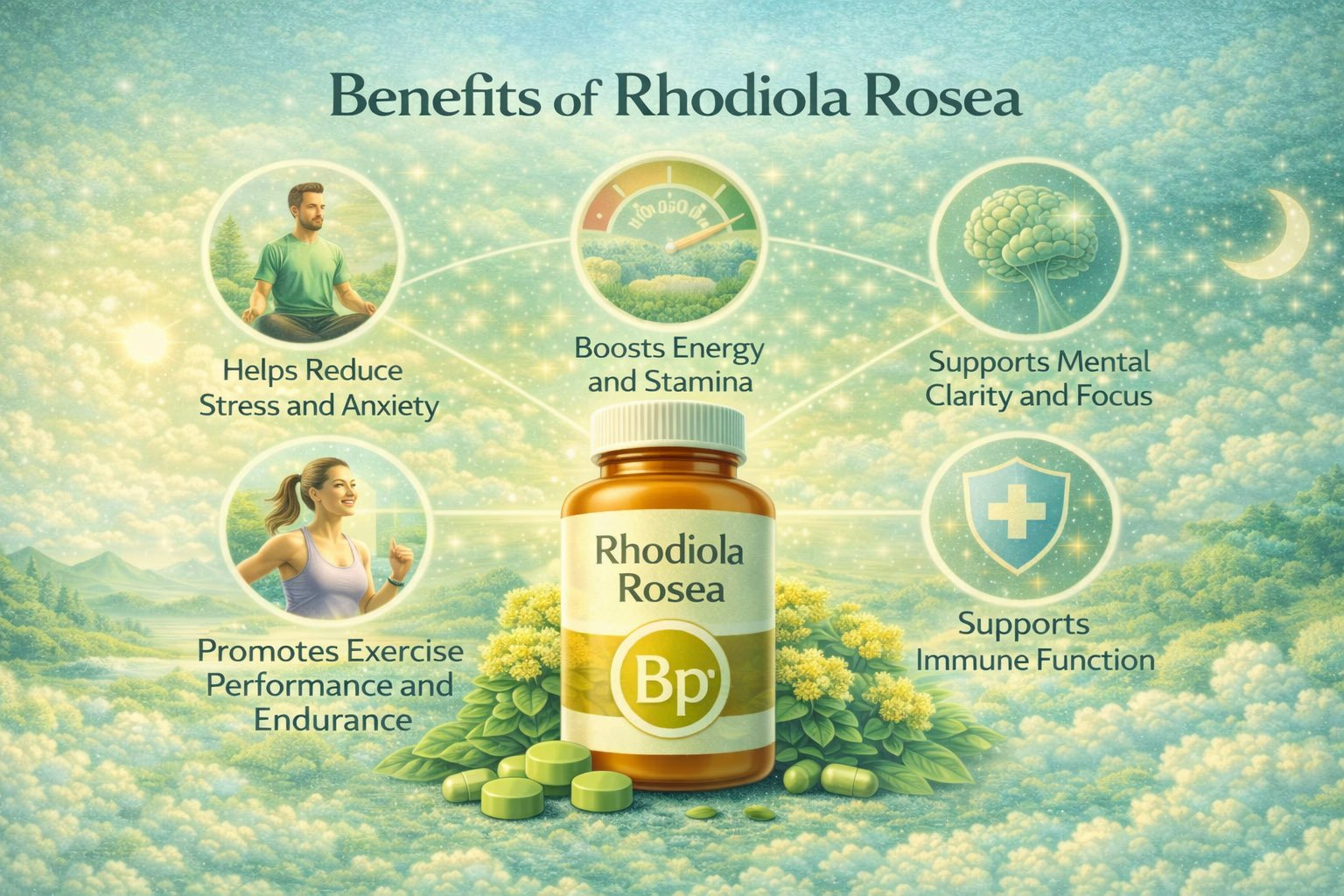
5) Supports Physical Performance and Endurance
Rhodiola may improve physical capacity during demanding activities.
It may help:
- Increase endurance
- Improve exercise tolerance
- Support muscle performance
- Reduce perceived exertion
This makes it a popular supplement among physically active individuals.
6) Supports Immune and Recovery Processes
Chronic stress can weaken immune function and slow recovery.
Rhodiola may help:
- Support immune resilience
- Reduce stress-related inflammation
- Promote recovery
- Maintain overall health
Who May Benefit from Rhodiola Rosea
Rhodiola supplementation may be beneficial for individuals experiencing physical or mental fatigue, stress, or reduced performance.
Common groups include:
Individuals with chronic fatigue
People under high stress
Professionals with demanding workloads
Students
Athletes
Shift workers
Caregivers
Individuals experiencing burnout
People with low energy levels
Individuals seeking improved resilience
Rhodiola is often used during periods of sustained physical or emotional demand.
Safety and Dosage
Recommended Intake and Safe Supplementation
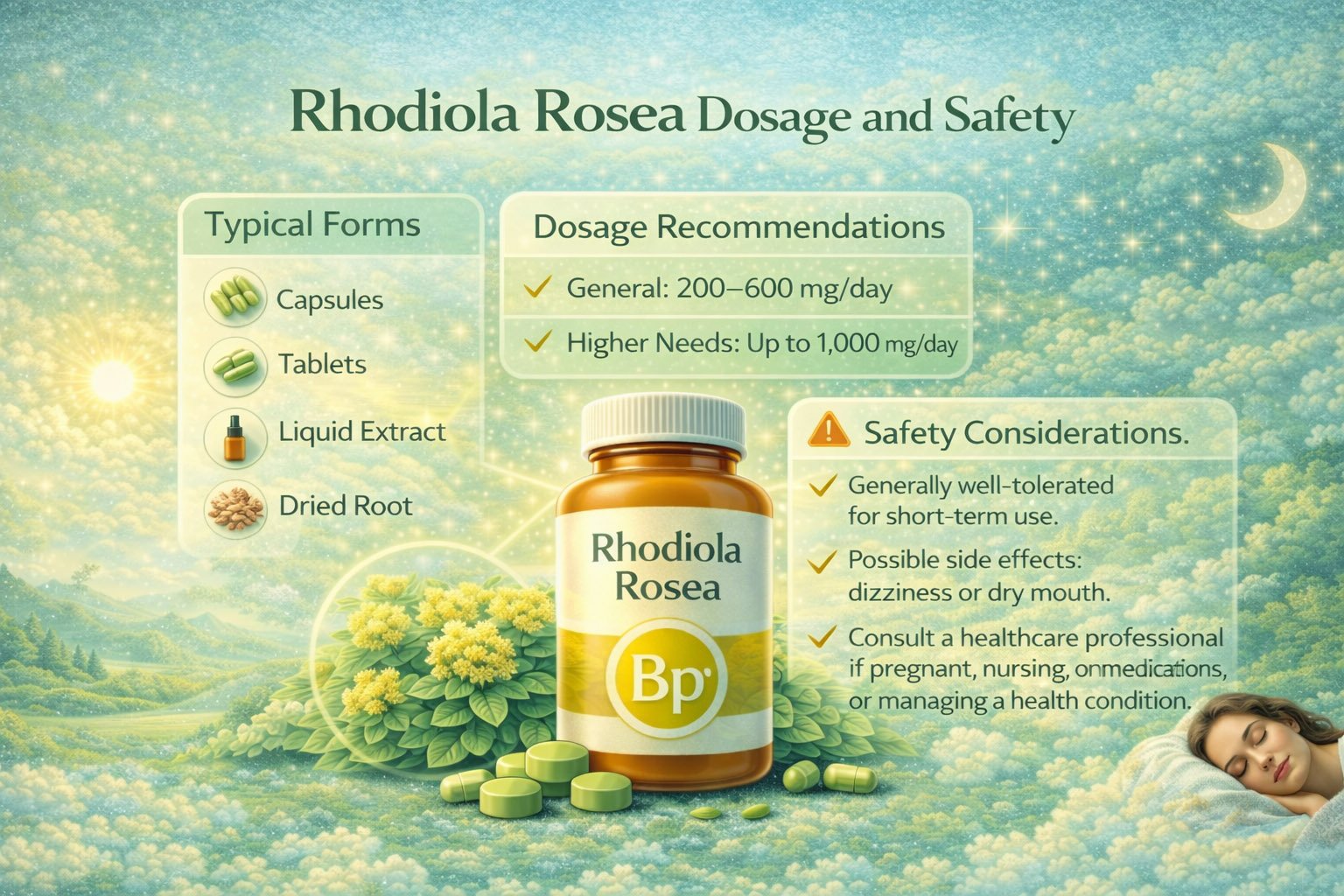
Typical Daily Dosage
General support:
200 to 400 mg per day
Standardized extract:
3% rosavins
1% salidroside
Some individuals may benefit from:
100 to 600 mg per day
Dosage may vary depending on extract strength and individual response.
Best Time to Take Rhodiola
Rhodiola is typically taken:
In the morning
Before physical or mental activity
Because rhodiola may increase alertness, late-day use may interfere with relaxation in some individuals.
Possible Side Effects
Rhodiola is generally well tolerated.
Possible mild side effects may include:
Dry mouth
Dizziness
Restlessness
Mild headache
These effects are uncommon and usually temporary.
Safety Considerations
Consult a healthcare professional before use if:
Pregnant or breastfeeding
Taking psychiatric medications
Managing chronic medical conditions
Sensitive to stimulating herbs
Rhodiola should be used cautiously in individuals with bipolar disorder due to potential mood activation.
Evidence and Research
Scientific research suggests that rhodiola rosea may help improve fatigue, cognitive performance, and stress resilience.
Clinical findings include:
Reduced fatigue in individuals under stress
Improved mental performance and attention
Enhanced physical endurance
Reduced burnout symptoms
Improved resilience to stress
Rhodiola has been studied in populations exposed to demanding physical and mental conditions, including healthcare workers, students, and military personnel.
Best Supplements
Common Forms of Rhodiola Rosea
Standardized Extract
Most commonly used form
Ensures consistent potency
Typically standardized to:
3% rosavins
1% salidroside
Rhodiola Root Extract
Whole-plant extract
May contain broader phytochemical profile
Capsules
Convenient
Precise dosing
Most widely available
Liquid Extract
Rapid absorption
Flexible dosing
Combination Formulas
Often combined with:
B vitamins
Magnesium
Adaptogenic herbs
These formulations may support comprehensive stress and energy management.
FAQ
Does rhodiola help with fatigue?
Yes. Rhodiola is commonly used to support energy levels and reduce fatigue, particularly during periods of stress or prolonged mental or physical demand.
How long does rhodiola take to work?
Some individuals notice effects within:
A few days
More consistent benefits may develop within:
2 to 4 weeks
Can rhodiola improve focus?
Rhodiola may support concentration, attention, and mental clarity, particularly during periods of fatigue or stress.
Can I take rhodiola every day?
Yes. Rhodiola is commonly used as a daily supplement during periods of increased stress or demand.
Is rhodiola a stimulant?
No. Rhodiola is an adaptogen, not a stimulant. It supports the body’s stress-response systems rather than directly stimulating the nervous system.
Medical Disclaimer
This content is for informational purposes only and does not constitute medical advice. Always consult a qualified healthcare professional.
Editorial Transparency
This article was created following evidence-based health content guidelines and reviewed by the VitaCoreBalance Editorial Team.
SOURCES:
- National Center for Complementary and Integrative Health (NCCIH) — Rhodiola
https://www.nccih.nih.gov/health/rhodiola - European Medicines Agency (EMA) — Rhodiola rosea Root
https://www.ema.europa.eu/en/medicines/herbal/rhodiolae-radix - Mount Sinai — Rhodiola
https://www.mountsinai.org/health-library/herb/rhodiola - Mayo Clinic — Rhodiola
https://www.mayoclinic.org/drugs-supplements-rhodiola/art-20363726 - Cleveland Clinic — Adaptogens
https://health.clevelandclinic.org/adaptogens - Harvard Health Publishing — Can adaptogens help you handle stress?
https://www.health.harvard.edu/staying-healthy/can-adaptogens-help-you-handle-stress