
Peppermint Oil for Digestive and Overall Health

VitaCoreBalance Editorial Team | Research-based health content · Editorial review process | March 2026 – Updated April
How Peppermint Oil Supports Digestive Comfort, Gastrointestinal Function, and Daily Wellness
Peppermint oil is a plant-derived extract widely used to support digestive comfort, gastrointestinal function, and overall well-being. It contains natural compounds such as menthol that help relax smooth muscles in the digestive tract and promote digestive balance.
Peppermint oil has been used for centuries in traditional wellness practices and is now widely studied for its role in digestive health, gastrointestinal comfort, and functional support. It is commonly used to help reduce digestive discomfort, support normal digestion, and promote daily digestive resilience.
Modern lifestyles, dietary patterns, and stress levels may contribute to digestive discomfort in some individuals. In these situations, peppermint oil supplementation may help support digestive comfort and overall physiological balance.
What Is Peppermint Oil?
A Plant-Derived Essential Oil Used to Support Digestive and Functional Health
Peppermint oil is extracted from the leaves of the peppermint plant (Mentha piperita). It contains active compounds such as menthol and menthone that contribute to its functional effects on the digestive system and smooth muscle activity.
Peppermint oil is commonly used in:
- Digestive support
- Gastrointestinal comfort
- Nausea support
- Functional digestive disorders
- Stress-related digestive symptoms
- General wellness
It is widely used in both traditional and modern wellness approaches.
Benefits of Peppermint Oil
Supports Digestive Comfort, Gastrointestinal Function, and Daily Well-Being
1) Supports Digestive Comfort
Peppermint oil helps relax muscles in the digestive tract.
It may help support:
- Digestive comfort
- Reduced abdominal discomfort
- Improved digestive ease
- Gastrointestinal relaxation
Digestive comfort is an important component of overall health.
2) Supports Gastrointestinal Function
Peppermint oil contributes to normal digestive processes.
It may help support:
- Healthy digestion
- Gastrointestinal balance
- Digestive efficiency
- Digestive resilience
Proper digestive function supports daily wellness.
3) Supports Relief of Bloating and Gas
Peppermint oil is commonly used to support digestive comfort after meals.
It may help:
- Reduce bloating
- Reduce gas
- Improve abdominal comfort
- Support digestive relaxation
These effects are commonly reported in digestive wellness settings.
4) Supports Stress-Related Digestive Symptoms
Digestive symptoms are often influenced by stress.
Peppermint oil may help support:
- Digestive comfort during stress
- Gastrointestinal relaxation
- Digestive resilience
- Functional digestive balance
The digestive system is closely linked to the nervous system.

5) Supports Nausea and Digestive Sensitivity
Peppermint oil is commonly used to support digestive tolerance.
It may help support:
- Nausea relief
- Digestive sensitivity
- Motion-related discomfort
- Post-meal comfort
Digestive stability supports daily functioning.
6) Supports Daily Wellness
Peppermint oil contributes to general digestive well-being.
It may help support:
- Digestive balance
- Daily comfort
- Functional health
- Overall wellness
Daily digestive comfort supports quality of life.
7) Supports Functional Health and Comfort
Peppermint oil is commonly used in functional wellness approaches.
It may support:
- Digestive comfort
- Gastrointestinal stability
- Daily physiological balance
- Wellness maintenance
Functional support contributes to long-term health.
Who May Benefit from Peppermint Oil
Peppermint oil supplementation may be beneficial for individuals experiencing digestive discomfort or seeking daily digestive support.
Common groups include:
Individuals with digestive discomfort
People experiencing bloating or gas
Individuals with sensitive digestion
People with irregular digestive patterns
Individuals experiencing stress-related digestive symptoms
People seeking digestive comfort
Individuals seeking natural digestive support
People with occasional nausea
Individuals seeking daily wellness support
Digestive comfort needs vary among individuals.
Safety and Dosage
Recommended Intake and Safe Supplementation
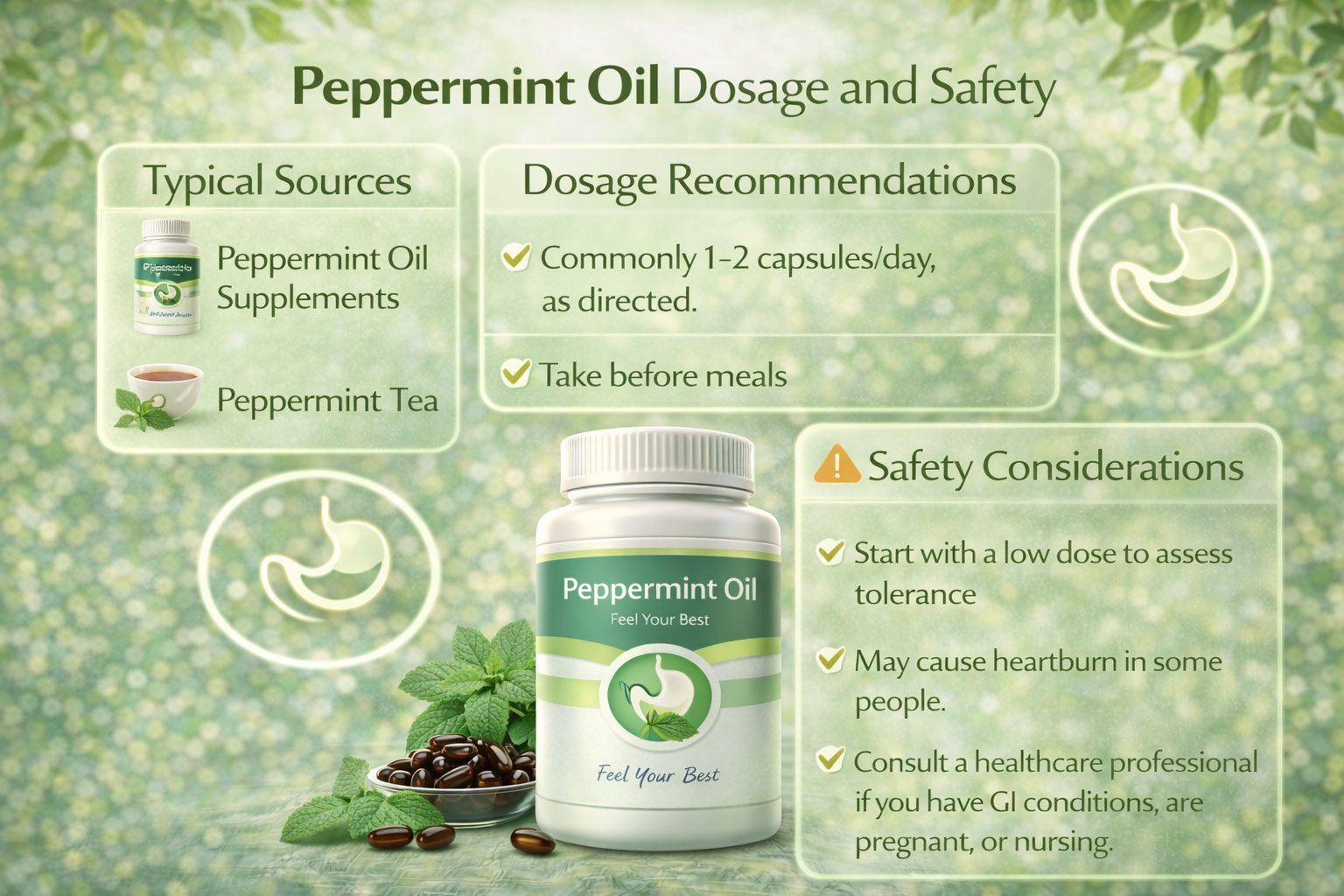
Typical Daily Intake
General digestive support:
180 to 225 mg per capsule
Common use:
Taken one to three times per day
Dosage varies depending on formulation.
Best Time to Take Peppermint Oil
Peppermint oil is typically taken:
Before meals
With meals
During periods of digestive discomfort
Consistency supports effectiveness.
Possible Side Effects
Peppermint oil is generally well tolerated.
Possible mild effects may include:
Heartburn
Digestive discomfort
Mild nausea
These effects are usually temporary.
Safety Considerations
Consult a healthcare professional before use if:
Gastroesophageal reflux disease (GERD) is present
Gallbladder conditions are present
Pregnant or breastfeeding
Taking prescription medications
Most individuals tolerate peppermint oil safely.
Evidence and Research
Scientific research supports the use of peppermint oil in digestive health and gastrointestinal comfort.
Clinical studies show that peppermint oil supplementation may:
Support digestive comfort
Reduce abdominal discomfort
Support gastrointestinal relaxation
Improve digestive function
Support digestive balance
Peppermint oil is widely studied in digestive and functional health research.
Best Supplements
Common Forms of Peppermint Oil Supplements
Enteric-Coated Capsules
Most widely used form
Designed to release in the intestine
Reduces stomach irritation
Liquid Peppermint Oil
Flexible dosing
Often used in diluted form
Combination Digestive Formulas
Often combined with:
Digestive enzymes
Herbal extracts
Probiotics
Used for digestive support.
FAQ
What does peppermint oil help with?
Peppermint oil supports digestive comfort, gastrointestinal function, and daily digestive wellness.
Can peppermint oil help with bloating?
Yes. Peppermint oil is commonly used to support digestive comfort and reduce bloating and gas.
When should I take peppermint oil?
Peppermint oil is typically taken before meals or during periods of digestive discomfort.
Is peppermint oil safe for daily use?
Peppermint oil is generally safe for daily use when taken as directed.
Can peppermint oil support nausea relief?
Peppermint oil is commonly used to support digestive comfort and reduce nausea.
Medical Disclaimer
This content is for informational purposes only and does not constitute medical advice. Always consult a qualified healthcare professional.
Editorial Transparency
This article was created following evidence-based health content guidelines and reviewed by the VitaCoreBalance Editorial Team.
SOURCES:
- National Institutes of Health (NIH) — Peppermint Oil
https://www.nccih.nih.gov/health/peppermint-oil - Mayo Clinic — Peppermint Oil Uses and Benefits
https://www.mayoclinic.org/drugs-supplements-peppermint/art-20364966 - Cleveland Clinic — Peppermint Oil for Digestive Health
https://health.clevelandclinic.org/peppermint-oil-benefits - National Center for Complementary and Integrative Health (NCCIH) — Herbs at a Glance: Peppermint Oil
https://www.nccih.nih.gov/health/peppermint-oil - American College of Gastroenterology — Irritable Bowel Syndrome and Peppermint Oil
https://gi.org/topics/irritable-bowel-syndrome/ - Mount Sinai — Peppermint
https://www.mountsinai.org/health-library/herb/peppermint