
Probiotics for Digestive and Overall Health
VitaCoreBalance Editorial Team | Research-based health content · Editorial review process | March 2026 – Updated April
How Probiotics Support Gut Balance, Immune Function, Metabolic Health, and Wellness
Probiotics are live microorganisms that support digestive health, immune function, and overall physiological balance. These beneficial bacteria help maintain a healthy gut microbiome, which plays a central role in digestion, metabolism, immune defense, and even brain function.
The human body contains trillions of microorganisms that influence nutrient absorption, inflammation regulation, and metabolic stability. When this microbial balance is disrupted, symptoms such as digestive discomfort, fatigue, weakened immunity, and metabolic imbalance may occur.
Probiotic supplementation is widely used to support gut health, strengthen immune resilience, improve digestive comfort, and promote long-term wellness.
What Are Probiotics?
Beneficial Microorganisms That Support Microbiome and Whole-Body Health
Probiotics are living microorganisms that help maintain a balanced microbial environment in the digestive system and throughout the body.
Common probiotic organisms include:
- Lactobacillus
- Bifidobacterium
- Saccharomyces boulardii
- Streptococcus thermophilus
- Bacillus species
These microorganisms support biological processes that extend far beyond digestion.
Probiotics support:
- Digestive health
- Immune system function
- Nutrient absorption
- Metabolic regulation
- Inflammation balance
- Gut-brain communication
- Skin health
- Overall wellness
The gut microbiome is now recognized as one of the most important regulators of human health.
Benefits of Probiotics
Supports Digestive Function, Immune Balance, and Metabolic Stability
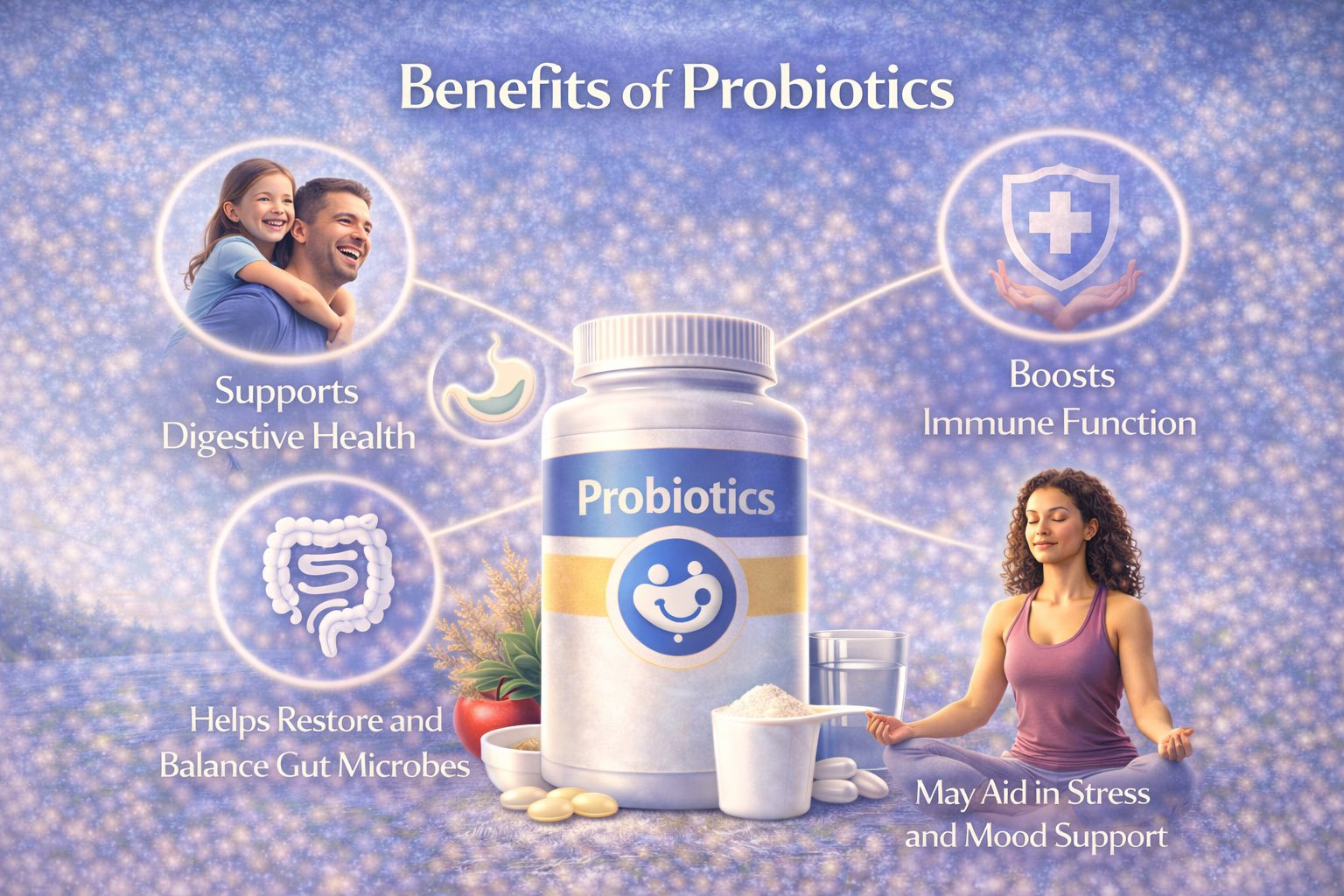
1) Supports Digestive Health and Gut Balance
Probiotics help maintain a healthy microbial environment in the digestive tract.
They may help:
- Improve digestive comfort
- Support bowel regularity
- Reduce bloating
- Maintain intestinal balance
- Support nutrient absorption
Healthy digestion is a foundation for overall health.
2) Supports Immune System Function
A large portion of the immune system is located in the digestive tract.
Probiotics may help support:
- Immune response
- Defense against pathogens
- Immune resilience
- Recovery from illness
Balanced gut bacteria are essential for effective immune function.
3) Supports Metabolic and Blood Sugar Regulation
The gut microbiome influences metabolic processes throughout the body.
Probiotics may help support:
- Blood sugar stability
- Insulin sensitivity
- Metabolic efficiency
- Energy balance
These effects contribute to long-term metabolic health.
4) Supports Gut-Brain Communication and Mood
The digestive system communicates with the brain through the gut-brain axis.
Probiotics may help support:
- Mood balance
- Mental clarity
- Stress resilience
- Emotional well-being
Emerging research suggests the microbiome plays a role in neurological health.
5) Supports Digestive Recovery After Antibiotics
Antibiotics can disrupt the balance of beneficial bacteria.
Probiotics may help support:
- Microbiome restoration
- Digestive stability
- Reduced digestive discomfort
- Recovery after medication use
Maintaining microbial balance is important after antibiotic therapy.
6) Supports Nutrient Absorption
Healthy gut bacteria help the body absorb nutrients efficiently.
Probiotics may support:
- Vitamin absorption
- Mineral absorption
- Digestive enzyme activity
- Metabolic efficiency
Nutrient absorption is essential for energy and cellular function.
7) Supports Long-Term Preventive Health
Balanced microbiome health is associated with improved long-term wellness.
Probiotics may support:
- Immune resilience
- Metabolic stability
- Digestive health
- Healthy aging
The microbiome is considered a key component of preventive health.
Who May Benefit from Probiotics
Probiotic supplementation may be beneficial for individuals seeking digestive support or broader health maintenance.
Common groups include:
Individuals with digestive discomfort
People using antibiotics
Individuals with irregular bowel movements
People with weakened immune function
Individuals with poor diet quality
People experiencing bloating or gas
Older adults
Individuals with metabolic concerns
People seeking preventive health support
Probiotic supplementation is widely used for maintaining gut and immune health.
Safety and Dosage
Recommended Intake and Safe Supplementation
Typical Daily Intake
General support:
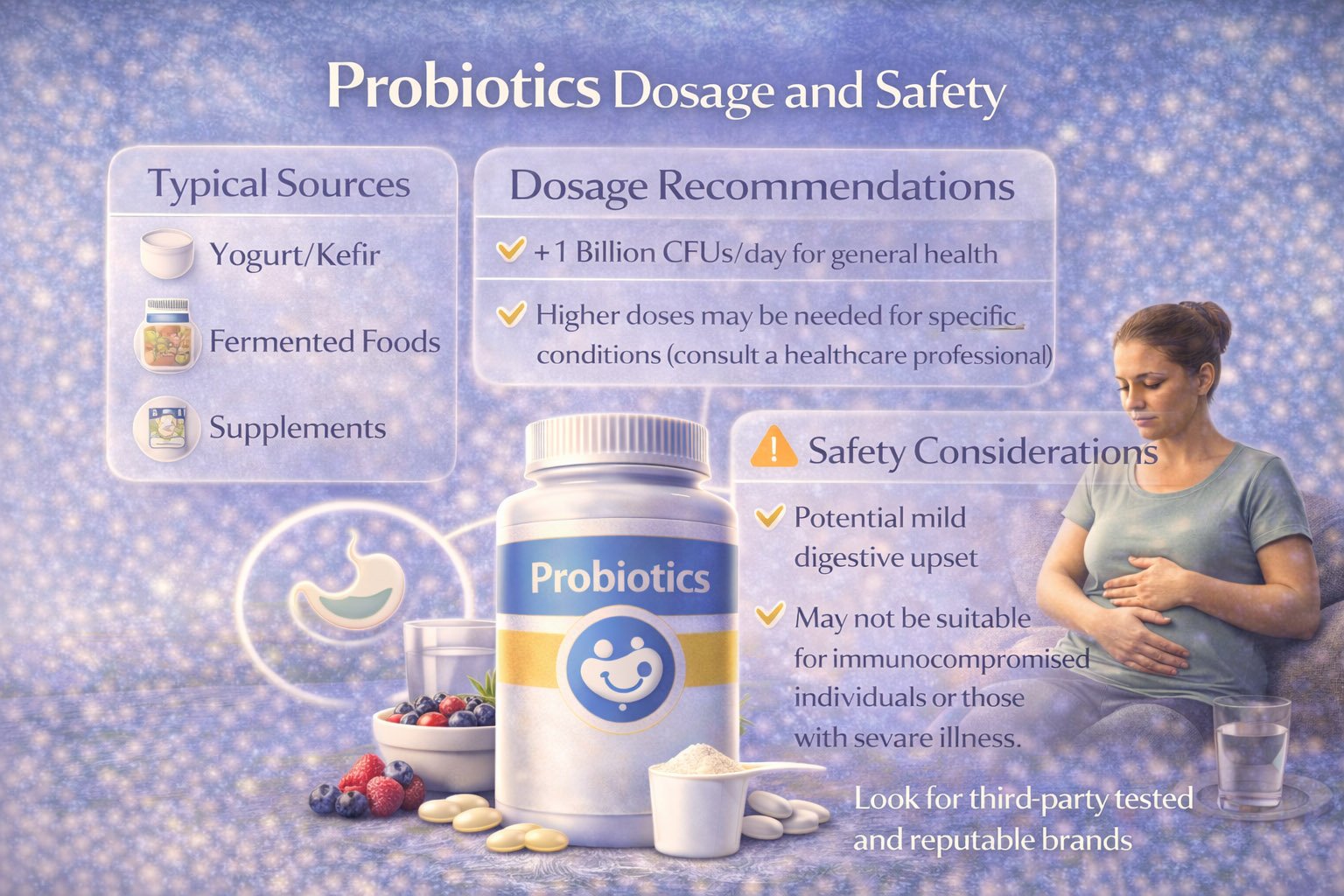
1 to 10 billion CFU per day
Therapeutic support:
10 to 50 billion CFU per day
Higher-potency formulations may be used under professional guidance.
Best Time to Take Probiotics
Probiotics are typically taken:
With meals
In the morning
At consistent daily timing
Consistency is more important than timing.
Possible Side Effects
Probiotics are generally well tolerated.
Possible mild effects may include:
Gas
Bloating
Digestive adjustment
These effects usually resolve within several days.
Safety Considerations
Consult a healthcare professional before use if:
Immune system conditions are present
Severe illness is present
Recent surgery occurred
Taking immunosuppressive medications
Most healthy individuals tolerate probiotics safely.
Evidence and Research
Scientific research consistently demonstrates that probiotics play a central role in digestive and immune health.
Clinical studies show that probiotic supplementation may:
Support digestive function
Improve microbiome balance
Enhance immune response
Reduce gastrointestinal discomfort
Support metabolic health
Promote long-term wellness
The microbiome is one of the most actively researched areas in modern health science.
Best Supplements
Common Types of Probiotic Supplements
Multi-Strain Probiotics
Contain multiple bacterial strains
Broad-spectrum support
Common daily use
Lactobacillus Formulas
Support digestive health
Common in daily supplements
Bifidobacterium Formulas
Support colon health
Common in long-term maintenance
Saccharomyces boulardii
Supports digestive resilience
Often used during antibiotic therapy
Delayed-Release Probiotics
Protect bacteria from stomach acid
Improve survival through digestion
FAQ
What do probiotics help with?
Probiotics support digestive health, immune function, nutrient absorption, and overall microbiome balance.
Can probiotics help with bloating?
Yes. Probiotics may help improve gut balance and reduce digestive discomfort such as bloating.
How long do probiotics take to work?
Some individuals notice improvements within:
Several days
More consistent benefits typically develop within:
2 to 4 weeks
Can I take probiotics every day?
Yes. Probiotics are commonly used as a daily supplement to support digestive and immune health.
Are probiotics safe for long-term use?
Probiotics are generally considered safe for long-term use in healthy individuals.
Medical Disclaimer
This content is for informational purposes only and does not constitute medical advice. Always consult a qualified healthcare professional.
Editorial Transparency
This article was created following evidence-based health content guidelines and reviewed by the VitaCoreBalance Editorial Team.
SOURCES:
- National Institutes of Health (NIH) — Potassium Fact Sheet for Health Professionals
https://ods.od.nih.gov/factsheets/Potassium-HealthProfessional/ - Mayo Clinic — Potassium
https://www.mayoclinic.org/drugs-supplements-potassium/art-20364851 - Cleveland Clinic — Potassium: Benefits, Deficiency, and Foods
https://my.clevelandclinic.org/health/articles/15640-potassium - Harvard T.H. Chan School of Public Health — Potassium
https://www.hsph.harvard.edu/nutritionsource/potassium/ - World Health Organization (WHO) — Potassium Intake for Adults and Children
https://www.who.int/publications/i/item/9789241504829 - National Health Service (NHS) — Potassium
https://www.nhs.uk/conditions/vitamins-and-minerals/potassium/