
Fiber (Psyllium) for Digestive and Metabolic Health
VitaCoreBalance Editorial Team | Research-based health content · Editorial review process | March 2026
How Psyllium Fiber Supports Gut Health, Cholesterol Balance, Blood Sugar Control, and Overall Wellness
Fiber, particularly soluble fiber such as psyllium, plays a central role in digestive health, metabolic regulation, and long-term wellness. Psyllium is derived from the husk of the Plantago ovata plant and is widely used as a dietary fiber supplement to support regular bowel movements, cholesterol balance, and blood sugar control.
Unlike many nutrients that target a single system, fiber influences multiple physiological processes, including gut microbiome activity, nutrient absorption, appetite regulation, and metabolic stability. Adequate fiber intake is associated with improved digestive function, healthier lipid levels, and better long-term metabolic health.
Because modern diets often lack sufficient fiber, supplementation with psyllium is commonly used as a simple and effective strategy to support digestive health and overall well-being.
What Is Fiber (Psyllium)?
A Soluble Fiber That Supports Digestion, Metabolism, and Gut Microbiome Health
Psyllium is a type of soluble fiber that absorbs water and forms a gel-like substance in the digestive tract. This property helps regulate bowel movements, support nutrient absorption, and promote healthy gut function.
Unlike stimulant laxatives, psyllium works mechanically by increasing stool bulk and improving intestinal movement without irritating the digestive system.
Psyllium supports:
- Digestive health
- Bowel regularity
- Cholesterol balance
- Blood sugar regulation
- Gut microbiome health
- Appetite control
- Weight management
- Metabolic stability
Soluble fiber such as psyllium is considered one of the most beneficial dietary components for long-term health maintenance.
Benefits of Fiber (Psyllium)
Supports Digestive Function, Metabolic Health, and Long-Term Wellness
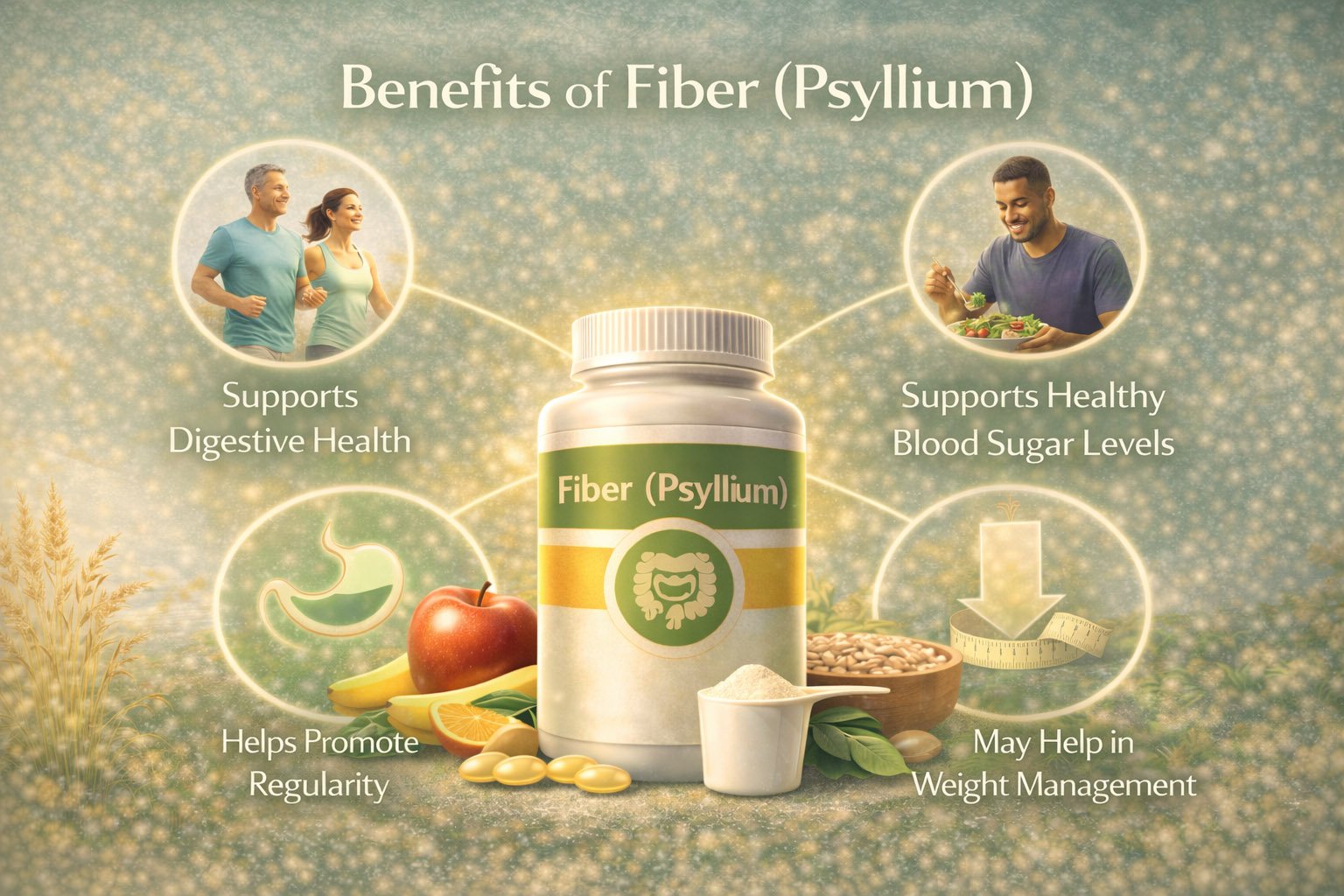
1) Supports Regular Bowel Movements
Psyllium helps normalize bowel function by increasing stool bulk and improving intestinal movement.
It may help:
- Relieve occasional constipation
- Support regular bowel movements
- Improve stool consistency
- Maintain digestive comfort
Consistent bowel function is an important component of overall health.
2) Supports Healthy Cholesterol Levels
Soluble fiber binds to bile acids in the digestive tract, helping remove cholesterol from the body.
Psyllium may help support:
- Healthy LDL cholesterol levels
- Lipid balance
- Cardiovascular health
- Long-term metabolic stability
This effect is one of the most well-established benefits of psyllium fiber.
3) Supports Blood Sugar Regulation
Psyllium slows the absorption of carbohydrates, helping maintain stable blood sugar levels.
It may help:
- Reduce blood sugar spikes
- Improve glucose control
- Support insulin sensitivity
- Promote metabolic balance
Stable blood sugar levels are essential for energy and long-term health.
4) Supports Gut Microbiome Health
Dietary fiber serves as fuel for beneficial gut bacteria.
Psyllium may help support:
- Healthy microbiome diversity
- Digestive balance
- Immune function
- Nutrient absorption
A healthy microbiome plays a key role in metabolic and immune health.
5) Supports Weight Management and Satiety
Fiber promotes fullness and helps regulate appetite.
Psyllium may help:
- Increase satiety
- Reduce overeating
- Support calorie control
- Support healthy body weight
These effects are particularly relevant for individuals managing weight or metabolic risk.
6) Supports Digestive Comfort and Intestinal Health
Psyllium helps maintain healthy digestive function.
It may support:
- Reduced bloating
- Improved digestive comfort
- Intestinal regularity
- Gastrointestinal health
Balanced digestion contributes to overall wellness.
7) Supports Long-Term Preventive Health
Adequate fiber intake is associated with improved long-term health outcomes.
Psyllium may support:
- Metabolic health
- Cardiovascular stability
- Digestive resilience
- Healthy aging
Fiber is considered a foundational component of preventive nutrition.
Who May Benefit from Fiber (Psyllium)
Psyllium supplementation may be beneficial for individuals with low dietary fiber intake or digestive and metabolic concerns.
Common groups include:
Individuals with occasional constipation
People with low fiber intake
Individuals managing cholesterol levels
People with blood sugar concerns
Individuals seeking weight management support
Older adults
People with sedentary lifestyles
Individuals seeking digestive health support
People aiming to improve overall wellness
Fiber intake is often below recommended levels in many populations.
Safety and Dosage
Recommended Intake and Safe Supplementation
Typical Daily Intake
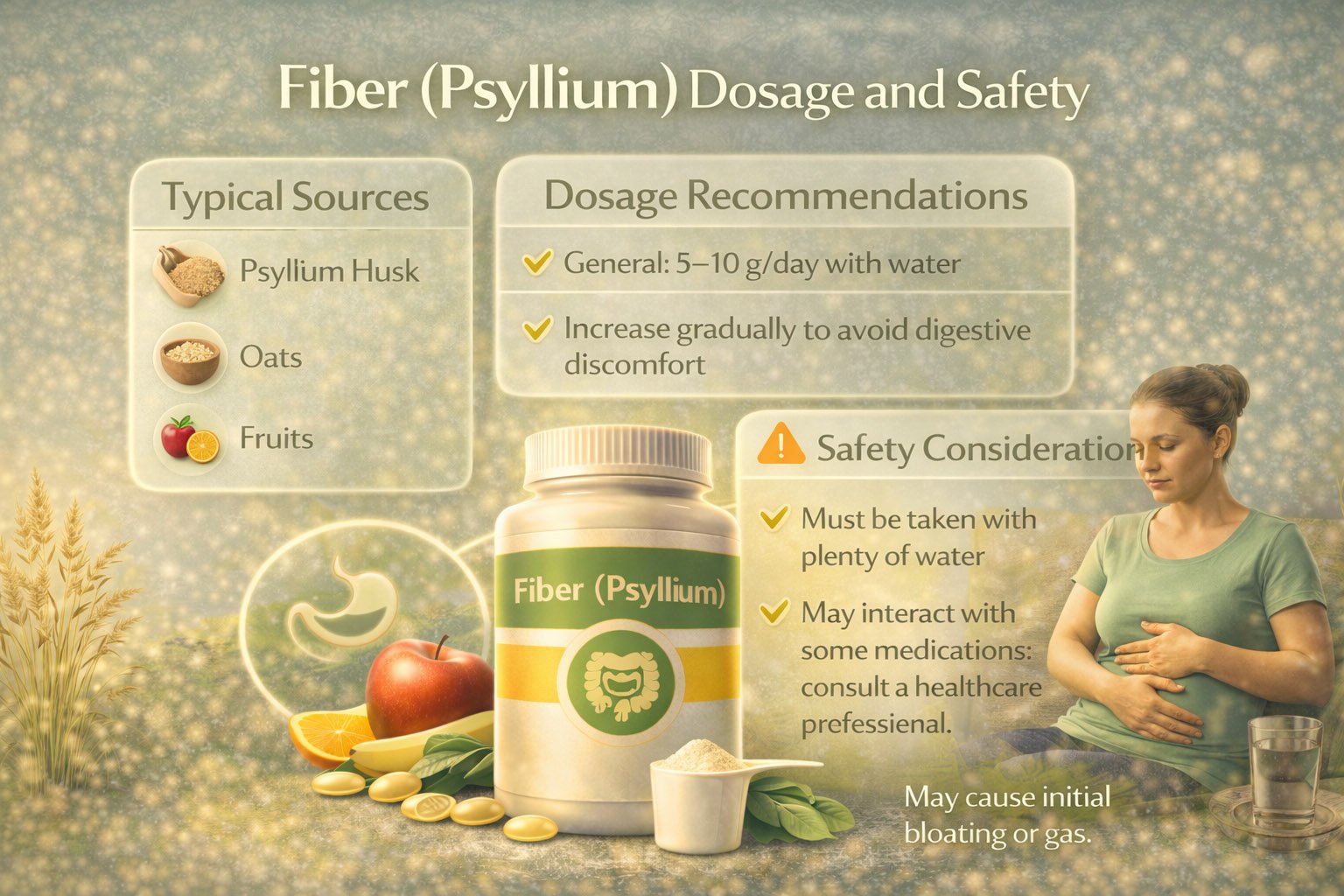
General digestive support:
5 to 10 grams per day
Cholesterol or metabolic support:
10 to 15 grams per day
Total daily fiber intake recommendation:
25 to 38 grams per day
Dosage should be increased gradually to improve tolerance.
Best Time to Take Psyllium
Psyllium is typically taken:
With meals
Before meals
At consistent daily timing
It should always be taken with adequate water.
Possible Side Effects
Psyllium is generally well tolerated.
Possible mild effects may include:
Bloating
Gas
Abdominal discomfort
These effects usually improve as the body adapts.
Safety Considerations
Consult a healthcare professional before use if:
Difficulty swallowing
Gastrointestinal conditions
Medication use requiring timing separation
Pregnant or breastfeeding
Adequate hydration is essential when taking fiber supplements.
Evidence and Research
Scientific research consistently supports the role of soluble fiber in digestive and metabolic health.
Clinical studies show that psyllium supplementation may:
Improve bowel regularity
Lower LDL cholesterol levels
Support blood sugar control
Improve digestive function
Support weight management
Promote gut microbiome health
Fiber intake is widely recognized as a key factor in long-term health maintenance.
Best Supplements
Common Forms of Psyllium Fiber
Psyllium Husk Powder
Most widely used form
High fiber content
Flexible dosing
Psyllium Capsules
Convenient
Portable
Easy to measure
Flavored Fiber Drinks
Improved taste
Easy daily use
Fiber Blends
Combine psyllium with:
Inulin
Oat fiber
Flaxseed
These blends provide broader digestive support.
Sugar-Free Fiber Supplements
Suitable for individuals managing blood sugar
FAQ
What does psyllium fiber help with?
Psyllium fiber supports digestion, cholesterol balance, blood sugar regulation, and overall metabolic health.
Can psyllium help with constipation?
Yes. Psyllium is commonly used to support regular bowel movements and relieve occasional constipation.
How much psyllium should I take daily?
Many adults take:
5 to 10 grams per day
Higher amounts may be used under guidance.
Is psyllium safe for daily use?
Yes. Psyllium is generally safe for daily use when taken with adequate water.
Can psyllium help lower cholesterol?
Yes. Soluble fiber such as psyllium is widely studied for its role in supporting healthy cholesterol levels.
Medical Disclaimer
This content is for informational purposes only and does not constitute medical advice. Always consult a qualified healthcare professional.
Editorial Transparency
This article was created following evidence-based health content guidelines and reviewed by the VitaCoreBalance Editorial Team.
SOURCES:
- National Institutes of Health (NIH) — Potassium Fact Sheet for Health Professionals
https://ods.od.nih.gov/factsheets/Potassium-HealthProfessional/ - Mayo Clinic — Potassium
https://www.mayoclinic.org/drugs-supplements-potassium/art-20364851 - Cleveland Clinic — Potassium: Benefits, Deficiency, and Foods
https://my.clevelandclinic.org/health/articles/15640-potassium - Harvard T.H. Chan School of Public Health — Potassium
https://www.hsph.harvard.edu/nutritionsource/potassium/ - World Health Organization (WHO) — Potassium Intake for Adults and Children
https://www.who.int/publications/i/item/9789241504829 - National Health Service (NHS) — Potassium
https://www.nhs.uk/conditions/vitamins-and-minerals/potassium/