
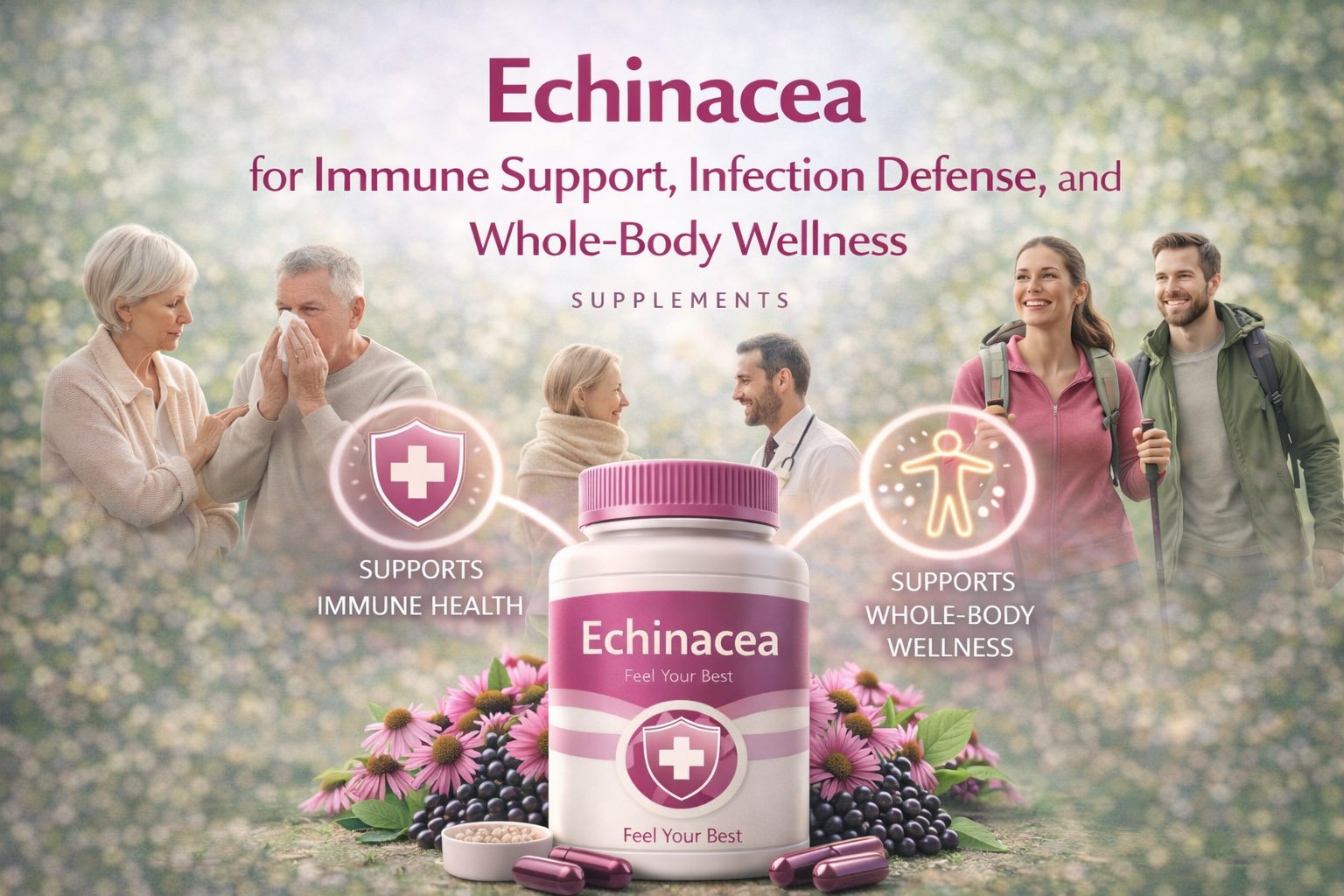
Echinacea for Immune Support, Infection Defense, and Whole-Body Wellness
VitaCoreBalance Editorial Team | Research-based health content · Editorial review process | March 2026 – Updated April
Echinacea is one of the most widely used herbal supplements for supporting immune function and reducing the severity of respiratory infections. Derived from flowering plants native to North America, echinacea has been used for centuries in traditional medicine to strengthen immune resilience, support recovery from illness, and help the body respond to environmental stress.
Modern research suggests that echinacea may help stimulate immune cell activity, reduce inflammation, and shorten the duration of upper respiratory infections. Its active compounds—including alkamides, polysaccharides, and flavonoids—contribute to immune regulation and protection against pathogens.
Today, echinacea is commonly used as a natural supplement for:
- Immune system support
- Infection defense
- Cold and flu symptom management
- Inflammation control
- Respiratory health
- Recovery from illness
- Seasonal immune resilience
- Overall wellness support
Because of its immune-modulating properties and long history of use, echinacea remains one of the most popular herbal supplements for preventive and supportive immune care.
What Is Echinacea
Echinacea refers to a group of flowering plants in the genus Echinacea, most commonly Echinacea purpurea, Echinacea angustifolia, and Echinacea pallida. The roots, leaves, and flowers are used to produce standardized extracts for dietary supplements.
Echinacea contains bioactive compounds that support immune function, including:
Alkamides
Polysaccharides
Flavonoids
Phenolic acids
These compounds help regulate immune signaling and support the body’s defense mechanisms.
Echinacea works primarily by:
- Supporting immune cell activation
- Enhancing natural defense response
- Reducing inflammation
- Supporting respiratory health
- Promoting recovery during illness
- Supporting immune resilience
Unlike vitamins and minerals, echinacea functions as an herbal immune modulator that helps the body respond more efficiently to infection and stress.
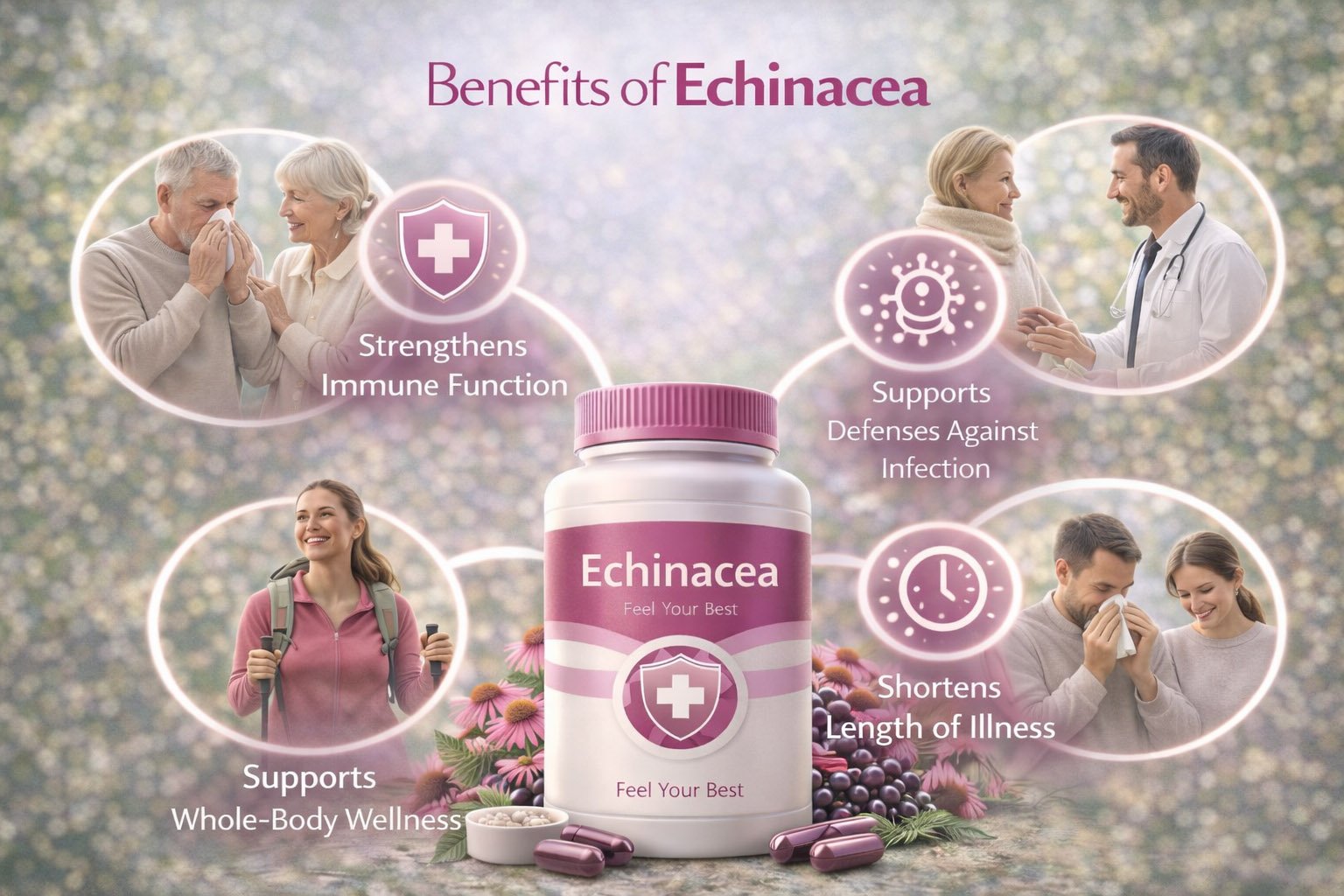
Benefits of Echinacea
Immune System Support and Infection Defense
Echinacea is best known for its role in supporting immune function during seasonal illness.
Research suggests echinacea may:
- Reduce duration of cold symptoms
- Support immune response
- Enhance white blood cell activity
- Improve recovery time
- Support immune resilience
These immune-support effects are the primary reason echinacea is widely used.
Respiratory Health and Cold Symptom Management
Echinacea supports respiratory function and may help reduce symptoms associated with upper respiratory infections.
Benefits include:
- Reduced nasal congestion
- Improved respiratory comfort
- Reduced throat irritation
- Faster symptom resolution
- Support for airway health
This makes echinacea particularly useful during seasonal illness and periods of increased respiratory stress.
Inflammation Control and Immune Balance
Echinacea helps regulate inflammatory responses, supporting immune balance and recovery.
It supports:
- Reduced inflammation
- Improved immune regulation
- Faster recovery from illness
- Protection against immune stress
Balanced inflammation is essential for effective immune defense without excessive tissue damage.
Antioxidant Protection and Cellular Defense
Echinacea contains antioxidant compounds that help protect cells from oxidative stress.
Benefits include:
- Reduced oxidative damage
- Support for immune stability
- Cellular protection
- Healthy aging support
Antioxidant protection contributes to long-term resilience and wellness.
Recovery and Resilience During Illness
Echinacea supports the body’s recovery processes during infection or stress.
It may contribute to:
- Faster recovery from illness
- Improved immune resilience
- Reduced fatigue during recovery
- Support for physical resilience
These effects make echinacea useful during periods of increased physiological demand.
Who May Benefit from Echinacea
Echinacea supplementation may be particularly beneficial for individuals exposed to seasonal illness or immune stress.
Common groups include:
People with frequent colds or respiratory infections
Individuals under chronic stress
Older adults
People exposed to crowded environments
Individuals traveling frequently
People with seasonal immune challenges
Individuals seeking natural immune support
People recovering from illness
Echinacea is commonly used during high-risk seasons and periods of increased immune demand.
Safety and Dosage
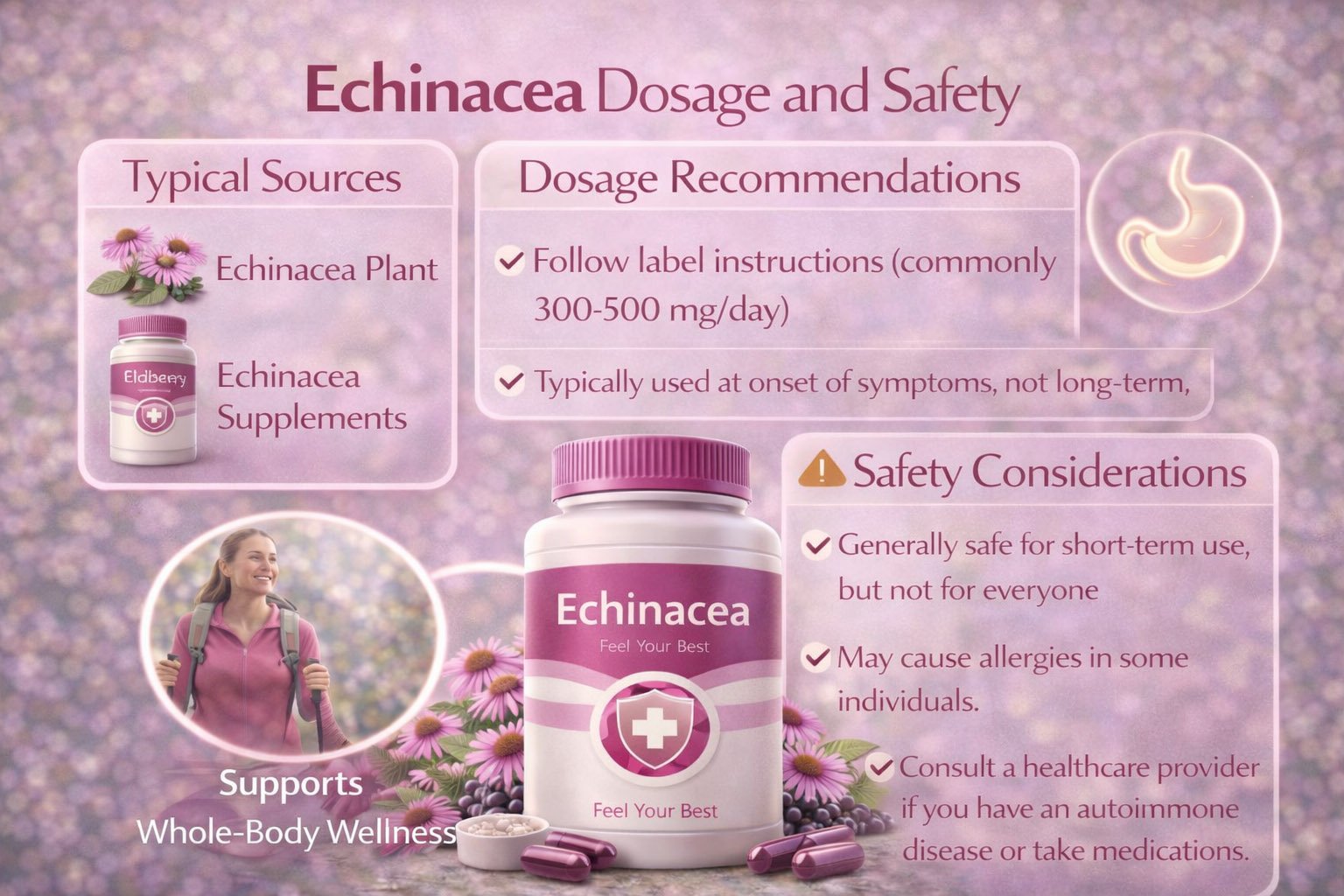
Echinacea is generally safe when used within recommended dosage ranges and for appropriate durations.
Typical Daily Dosage
General immune support:
300–500 mg per day
Seasonal immune support:
500–900 mg per day
Short-term use during illness:
900–1500 mg per day
Dosage may vary depending on extract strength and formulation.
Best Time to Take Echinacea
Echinacea can be taken:
With meals
In divided doses
At the first sign of illness
During periods of increased immune demand
Timing is flexible, but consistency improves effectiveness.
Safety Considerations
Echinacea is safe for most adults when used appropriately.
Possible side effects may include:
Mild digestive discomfort
Allergic reactions (rare)
Use caution if:
You have autoimmune conditions
You have severe allergies to plants
You are pregnant or breastfeeding
You are using immunosuppressive medications
Short-term use is generally recommended during periods of immune stress.
Evidence and Research
Echinacea has been studied extensively for its role in immune support and respiratory health.
Research findings show:
Echinacea supports immune response
Echinacea may reduce duration of colds
Echinacea reduces inflammation
Echinacea supports respiratory health
Echinacea improves recovery during illness
Clinical evidence suggests echinacea is most effective when used early during infection or during periods of increased immune demand.
Best Supplements
Choosing the right echinacea supplement depends on formulation, concentration, and intended use.
Echinacea Extract Capsules
Best for:
Daily immune support
Convenience
Standardized dosing
Echinacea Liquid Extract
Best for:
Fast absorption
Flexible dosing
Short-term immune support
Echinacea Tea
Best for:
Seasonal immune support
Hydration
Gentle supplementation
Standardized Echinacea Extract
Best for:
Consistent potency
Reliable effectiveness
Clinical dosing
Echinacea Combination Formulas
Best for:
Enhanced immune support
Seasonal illness prevention
Comprehensive immune defense
FAQ
Can echinacea prevent colds?
Echinacea may help reduce the duration and severity of cold symptoms, but it does not guarantee prevention.
Is echinacea safe to take every day?
Short-term daily use is generally safe. Many people use echinacea during periods of increased immune demand.
Can echinacea boost the immune system?
Yes. Echinacea supports immune cell activity and helps regulate inflammatory responses.
When should I take echinacea?
Echinacea is often taken at the first sign of illness or during high-risk seasons.
Can children take echinacea?
Yes, when using age-appropriate formulations and recommended dosages.
Medical Disclaimer
This content is for informational purposes only and does not constitute medical advice. Always consult a qualified healthcare professional.
Editorial Transparency
This article was created following evidence-based health content guidelines and reviewed by the VitaCoreBalance Editorial Team.
SOURCES:
- https://ods.od.nih.gov/factsheets/Echinacea-HealthProfessional/
- https://www.ncbi.nlm.nih.gov/books/NBK548440/
- https://pubmed.ncbi.nlm.nih.gov/17597571/
- https://www.ncbi.nlm.nih.gov/pmc/articles/PMC4072736/
- https://www.mayoclinic.org/drugs-supplements-echinacea/art-20364666
- https://www.cochranelibrary.com/cdsr/doi/10.1002/14651858.CD000530.pub3/full