
Vitamin D for Immune Support, Bone Strength, and Whole-Body Health
VitaCoreBalance Editorial Team | Research-based health content · Editorial review process | March 2026 – Updated April
Vitamin D is one of the most essential nutrients for human health, playing a central role in immune regulation, bone integrity, metabolic balance, hormone signaling, and inflammation control. Often referred to as the “sunshine vitamin,” vitamin D is unique because the body can produce it through skin exposure to sunlight. However, modern indoor lifestyles, sunscreen use, aging, and geographic location have made vitamin D deficiency increasingly common worldwide.
Beyond bone health, vitamin D acts as a hormone-like regulator that influences hundreds of genes involved in immunity, cardiovascular function, brain health, sleep regulation, and metabolic processes. Adequate vitamin D levels are associated with stronger immune defenses, improved muscle strength, better mood stability, and reduced risk of chronic disease.
Vitamin D is widely used for:
- Immune system regulation
- Bone density and skeletal strength
- Inflammation control
- Muscle function and balance
- Cardiovascular health
- Hormonal and metabolic regulation
- Mood and cognitive support
- Sleep and circadian rhythm regulation
Because deficiency is widespread and often silent, vitamin D supplementation has become one of the most important preventive strategies in modern health care.
What Is Vitamin D
Vitamin D is a fat-soluble vitamin that functions more like a hormone than a traditional nutrient. It regulates calcium and phosphorus balance, supports immune cell signaling, and influences gene expression throughout the body.
There are two primary forms:
Vitamin D3 (cholecalciferol)
Produced in the skin from sunlight and commonly used in supplements
Vitamin D2 (ergocalciferol)
Derived from plant sources and used in some fortified foods
Vitamin D3 is generally considered more effective at raising blood vitamin D levels.
Once activated in the liver and kidneys, vitamin D becomes calcitriol—the biologically active form that regulates calcium absorption, immune function, and cellular signaling.
Vitamin D supports:
- Immune cell activation
- Calcium absorption
- Bone mineralization
- Muscle contraction
- Hormone regulation
- Inflammation control
- Nervous system function
- Cardiovascular health
Because vitamin D receptors exist in nearly every tissue, its influence extends across the entire body.
Benefits of Vitamin D
Immune System Regulation and Infection Defense
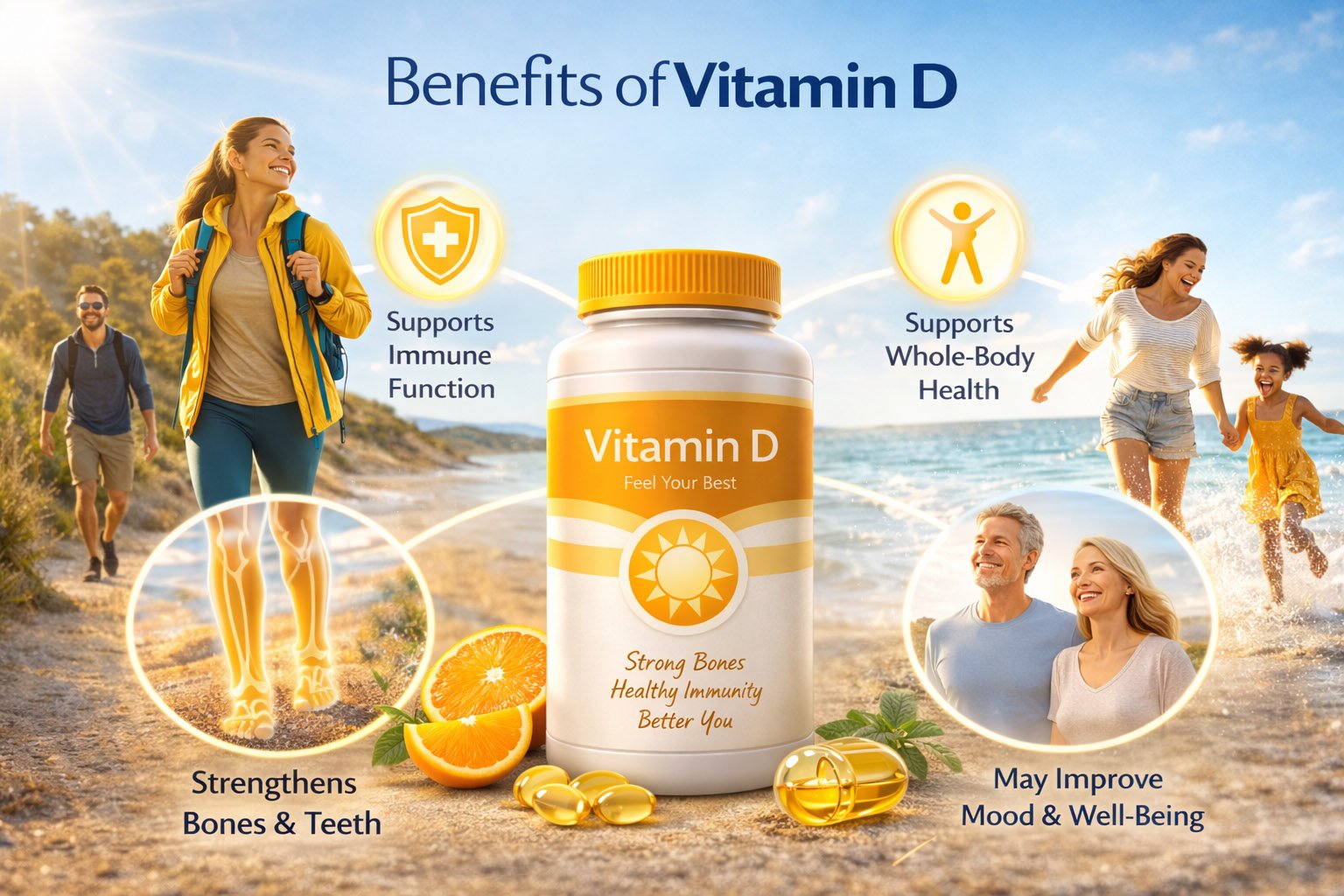
Vitamin D plays a direct role in immune system balance. It helps immune cells identify pathogens while preventing excessive inflammation that can damage healthy tissue.
Research shows vitamin D supports:
- Stronger immune response
- Reduced infection risk
- Balanced inflammatory response
- Faster recovery from illness
- Respiratory health
Vitamin D deficiency is strongly associated with increased susceptibility to infections and immune dysfunction.
Bone Strength and Calcium Absorption
Vitamin D is essential for maintaining strong bones because it regulates calcium absorption in the intestine.
Without sufficient vitamin D, calcium cannot be efficiently absorbed, leading to:
- Bone loss
- Osteoporosis
- Fracture risk
- Muscle weakness
- Skeletal deformities
Vitamin D works synergistically with calcium and magnesium to maintain skeletal integrity throughout life.
Muscle Strength and Fall Prevention
Vitamin D supports neuromuscular coordination and muscle contraction. Adequate levels improve balance and reduce fall risk, particularly in older adults.
Benefits include:
- Improved muscle strength
- Better coordination
- Reduced fall risk
- Improved physical performance
- Enhanced recovery
This makes vitamin D critical for mobility and independence in aging populations.
Cardiovascular and Heart Health
Vitamin D influences vascular tone, inflammation, and blood pressure regulation.
Research suggests vitamin D supports:
- Healthy blood pressure
- Vascular elasticity
- Reduced inflammation
- Improved endothelial function
- Cardiovascular protection
Low vitamin D levels are commonly observed in individuals with cardiovascular disease.
Brain Health, Mood, and Cognitive Function
Vitamin D receptors are present in brain regions involved in mood regulation and cognition.
Vitamin D supports:
- Mood stability
- Cognitive performance
- Stress regulation
- Mental clarity
- Neurological protection
Low vitamin D levels are frequently associated with fatigue, low mood, and reduced cognitive performance.
Sleep and Circadian Rhythm Regulation
Vitamin D plays a role in regulating melatonin production and circadian rhythm stability.
Benefits include:
- Improved sleep quality
- Better sleep timing
- Reduced sleep disturbances
- Enhanced recovery during sleep
This connection explains why vitamin D deficiency is often associated with poor sleep.
Metabolic and Hormonal Health
Vitamin D influences insulin sensitivity, hormone balance, and inflammation.
It supports:
- Blood sugar regulation
- Metabolic stability
- Fat metabolism
- Hormonal balance
- Energy production
Vitamin D deficiency is commonly observed in individuals with metabolic syndrome and insulin resistance.
Who May Benefit from Vitamin D
Vitamin D supplementation may be especially beneficial for individuals with limited sunlight exposure or increased physiological demand.
Common groups include:
People with low sun exposure
Older adults
Individuals living in northern or southern latitudes
People with darker skin pigmentation
Individuals with obesity
People with bone density concerns
Individuals with frequent infections
People with chronic inflammation
Individuals with fatigue or low mood
People working indoors
Vitamin D deficiency is one of the most common nutrient deficiencies globally.
Safety and Dosage
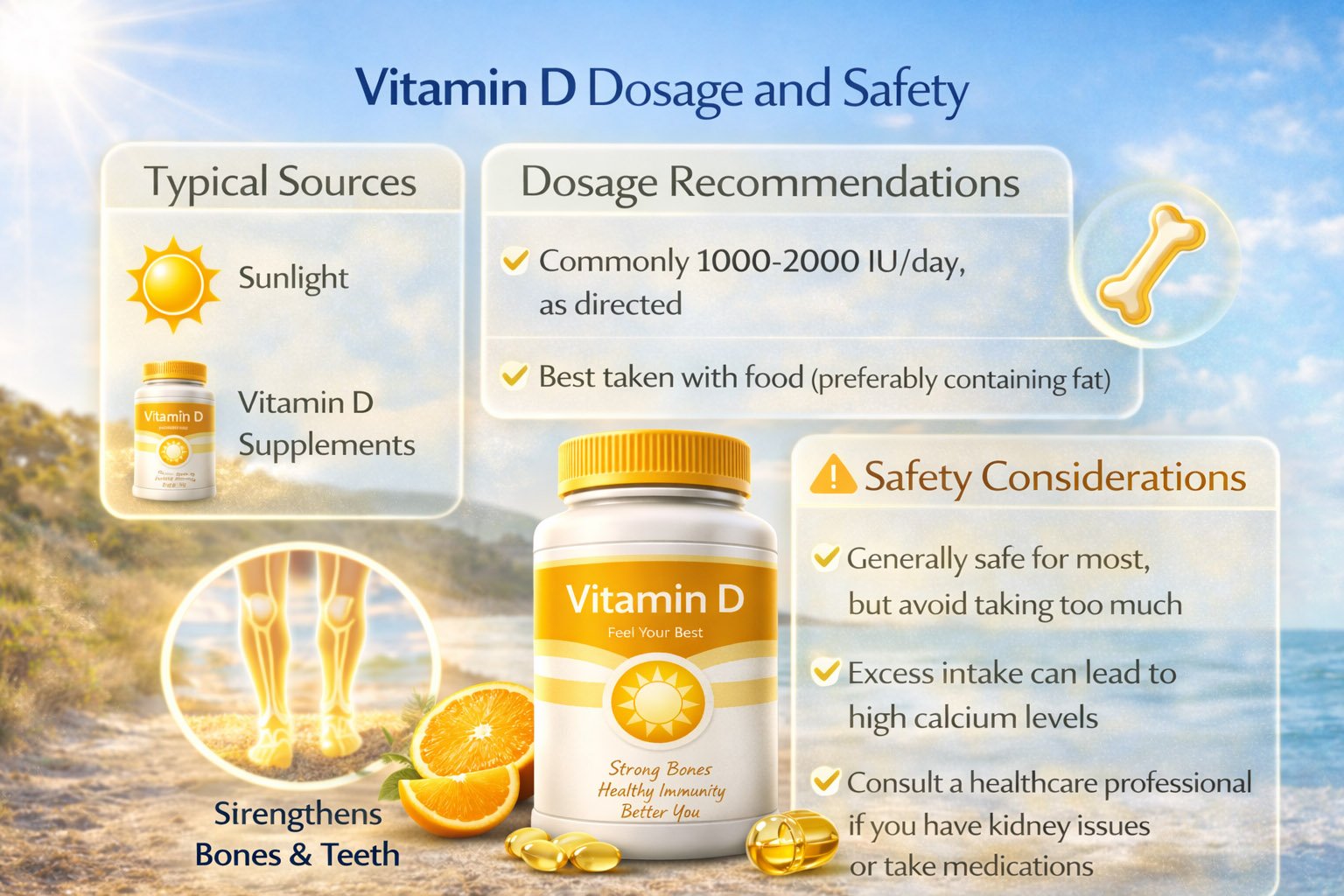
Vitamin D is safe when used within recommended ranges, but excessive intake can cause toxicity because it is fat-soluble.
Typical Daily Dosage
General health support:
1000–2000 IU per day
Immune support:
2000–4000 IU per day
Deficiency correction (medical supervision):
4000–5000 IU per day
Upper safe limit (adults):
4000 IU per day
Blood testing is the most reliable way to determine appropriate dosage.
Best Time to Take Vitamin D
Vitamin D is best taken:
With meals containing fat
In the morning or midday
Consistently each day
Fat improves absorption because vitamin D is fat-soluble.
Safety Considerations
Vitamin D is generally safe, but excessive intake can cause:
High blood calcium levels
Kidney stones
Nausea
Weakness
Confusion
Use caution if:
You have kidney disease
You have hypercalcemia
You take high-dose calcium supplements
You use prescription vitamin D
Routine blood testing helps ensure safe supplementation.
Evidence and Research
Vitamin D is one of the most widely studied nutrients in modern medicine, with extensive research supporting its role in bone health, immune regulation, and chronic disease prevention.
Research findings show:
Vitamin D supports immune system function
Vitamin D improves bone density
Vitamin D reduces fall risk in older adults
Vitamin D supports cardiovascular health
Vitamin D improves muscle strength
Vitamin D deficiency is common worldwide
Maintaining adequate vitamin D levels is considered a core component of preventive health care.
Best Supplements
Choosing the right vitamin D supplement depends on absorption, dosage, and individual needs.
Vitamin D3 (Cholecalciferol)
Best for:
Daily supplementation
Immune support
Bone health
Long-term maintenance
This is the most commonly recommended form.
Vitamin D3 with Vitamin K2
Best for:
Bone health
Calcium metabolism
Cardiovascular protection
Vitamin K2 helps direct calcium into bones instead of arteries.
Liquid Vitamin D
Best for:
Flexible dosing
Children and older adults
Individuals with swallowing difficulty
High-Potency Vitamin D
Best for:
Correcting deficiency
Short-term therapeutic use
Medical supervision
Vegan Vitamin D3 (Lichen-Based)
Best for:
Plant-based diets
Long-term supplementation
Ethical preferences
FAQ
How do I know if I need vitamin D?
Blood testing is the most reliable way to determine vitamin D status. Symptoms of deficiency can be subtle and include fatigue, muscle weakness, and frequent illness.
Can vitamin D boost the immune system?
Yes. Vitamin D supports immune cell regulation and helps maintain a balanced inflammatory response.
Is vitamin D safe to take every day?
Yes. Daily supplementation is safe within recommended dosage ranges.
Can vitamin D improve mood?
Yes. Vitamin D supports brain function and neurotransmitter regulation, which can influence mood and mental well-being.
Should vitamin D be taken with food?
Yes. Taking vitamin D with meals that contain fat improves absorption.
Medical Disclaimer
This content is for informational purposes only and does not constitute medical advice. Always consult a qualified healthcare professional.
Editorial Transparency
This article was created following evidence-based health content guidelines and reviewed by the VitaCoreBalance Editorial Team.
SOURCES:
- https://ods.od.nih.gov/factsheets/VitaminD-HealthProfessional/
- https://www.ncbi.nlm.nih.gov/books/NBK532266/
- https://pubmed.ncbi.nlm.nih.gov/28202713/
- https://www.ncbi.nlm.nih.gov/pmc/articles/PMC6075634/
- https://www.mayoclinic.org/drugs-supplements-vitamin-d/art-20363792
- https://www.cochranelibrary.com/cdsr/doi/10.1002/14651858.CD011511.pub2/full