
Melatonin for Sleep: Benefits, Uses, Dosage, and Safety
VitaCoreBalance Editorial Team | Research-based health content · Editorial review process | March 2026 – Updated: April 2026
Melatonin is a widely used supplement that supports sleep regulation and healthy sleep patterns. Although melatonin is naturally produced by the body, factors such as stress, irregular sleep schedules, artificial light exposure, and aging may contribute to sleep disturbances in some individuals.
Melatonin is a naturally occurring hormone produced by the pineal gland in the brain. It plays a central role in regulating the body’s internal clock, also known as the circadian rhythm, which helps control sleep and wake cycles. In recent years, melatonin supplements have become one of the most commonly used sleep aids worldwide, particularly for individuals experiencing difficulty falling asleep, jet lag, or disruptions in their sleep schedule.
When used appropriately, melatonin supplementation may support healthy sleep onset and improve overall sleep timing. However, like any supplement, it should be used thoughtfully and as part of a broader approach to sleep health that includes consistent routines, proper sleep hygiene, and attention to lifestyle factors.
This guide provides evidence-based information about how melatonin works, who may benefit from supplementation, recommended dosages, potential side effects, and safe use considerations.
What Is Melatonin?
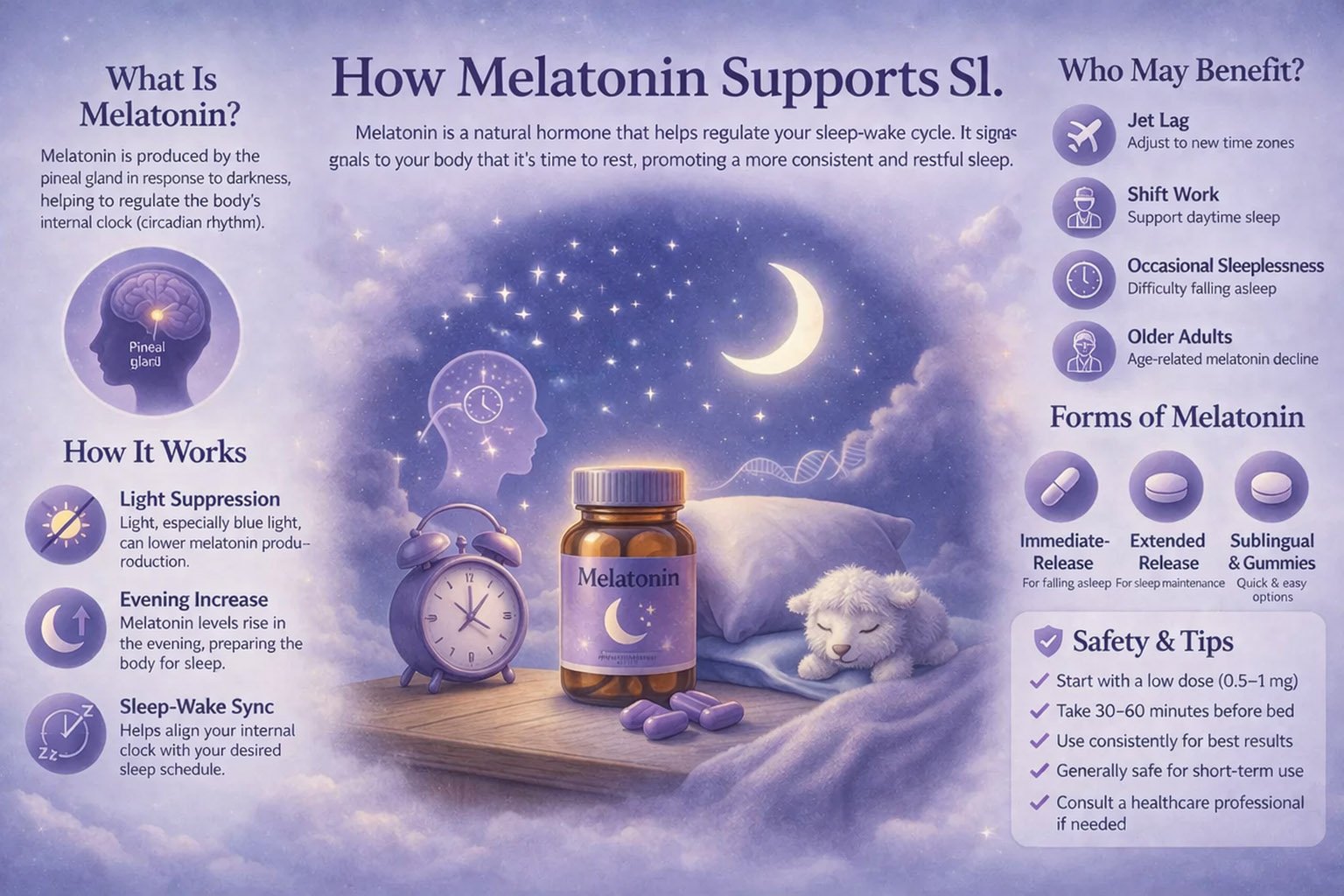
Melatonin is a hormone naturally released by the body in response to darkness. Its production increases in the evening, signaling to the body that it is time to prepare for sleep. Exposure to light — especially blue light from screens — can suppress melatonin production and delay sleep onset.
Melatonin does not “force” sleep in the same way that sedative medications do. Instead, it helps regulate the timing of sleep by reinforcing the body’s natural circadian rhythm. For this reason, melatonin is often described as a chronobiotic, meaning it helps adjust the timing of biological rhythms.
Melatonin levels typically:
- Rise in the evening
- Peak during the night
- Decline in the early morning
Disruptions in this pattern can occur due to:
- Shift work
- Jet lag
- Irregular sleep schedules
- Excessive evening light exposure
- Aging
- Stress
- Certain medical conditions
In these situations, supplemental melatonin may help restore a more consistent sleep-wake cycle.
How Melatonin Supports Sleep
Melatonin supports sleep primarily by helping the body recognize when it is time to sleep. It does not act as a sedative but instead helps coordinate the body’s internal timing signals.
Potential mechanisms include:
Regulation of Circadian Rhythm
Melatonin helps synchronize the sleep-wake cycle with environmental cues such as light and darkness. This is particularly important for individuals whose schedules shift frequently or who travel across time zones.
Support for Sleep Onset
Research suggests that melatonin supplementation may help reduce the time it takes to fall asleep, especially in individuals with delayed sleep phase syndrome or irregular sleep timing.
Adjustment to Time Zone Changes
Melatonin is commonly used to help manage jet lag by assisting the body in adapting to a new sleep schedule.
Support for Older Adults
Natural melatonin production tends to decline with age. Supplemental melatonin may help compensate for this reduction in some individuals.
Who May Benefit from Melatonin Supplementation
Melatonin supplementation may be helpful in specific situations where sleep timing is disrupted rather than when sleep problems are caused by other underlying medical conditions.
Common scenarios include:
Difficulty Falling Asleep
Individuals who take a long time to fall asleep may benefit from melatonin when sleep timing is misaligned with their natural circadian rhythm.
Jet Lag
Travel across multiple time zones can disrupt the body’s internal clock. Melatonin may help reduce symptoms such as fatigue and difficulty sleeping.
Shift Work
People who work night shifts or rotating schedules often experience irregular sleep patterns. Melatonin may help support sleep timing during daytime rest periods.
Delayed Sleep Phase Syndrome
This condition involves a consistent delay in sleep timing, often resulting in difficulty falling asleep until very late at night.
Age-Related Changes in Sleep
Older adults may produce less melatonin, which can contribute to changes in sleep patterns.
Forms of Melatonin Supplements
Melatonin supplements are available in several forms. The most appropriate choice depends on individual sleep patterns and preferences.
Immediate-Release Melatonin
This form is absorbed quickly and may help individuals who have difficulty falling asleep.
Extended-Release (Controlled-Release) Melatonin
This form releases melatonin gradually over time and may support sleep maintenance throughout the night.
Sublingual Melatonin
These tablets dissolve under the tongue and may be absorbed more rapidly.
Gummies or Liquid Formulas
These may be easier to take for individuals who have difficulty swallowing pills.
Regardless of the form, consistent timing of use is often more important than the specific delivery method.
Recommended Dosage and Timing
Melatonin requirements vary widely between individuals. Lower doses are often effective, and starting with the smallest practical amount is generally recommended.
Typical adult dosage ranges:
- 0.5 to 1 milligram for sensitive individuals
- 1 to 3 milligrams for general sleep support
- 3 to 5 milligrams in specific situations under professional guidance
Higher doses are not necessarily more effective and may increase the likelihood of side effects.
Timing of Use
Melatonin is most effective when taken at the correct time relative to the desired sleep schedule.
General guidance:
- Take melatonin approximately 30 to 60 minutes before bedtime
- Use at the same time each night
- Avoid taking it too late in the evening
Consistency is key. Irregular use may reduce effectiveness.
Safety and Potential Side Effects
Melatonin is generally considered safe for short-term use in healthy adults when taken at appropriate doses. However, mild side effects may occur.
Possible side effects include:
- Daytime drowsiness
- Headache
- Dizziness
- Nausea
- Vivid dreams
- Temporary changes in mood
These effects are typically mild and may improve with dose adjustments.
Interactions and Precautions
Melatonin may interact with certain medications or medical conditions. Individuals should consult a qualified healthcare professional before starting supplementation, particularly if they:
- Take antidepressants
- Use blood pressure medications
- Take blood thinners
- Have autoimmune conditions
- Have seizure disorders
- Are pregnant or breastfeeding
- Are managing chronic medical conditions
Children and adolescents should only use melatonin under medical supervision.
Lifestyle Factors That Influence Melatonin
Supplementation is most effective when combined with healthy sleep habits. Environmental and behavioral factors strongly influence natural melatonin production.
Key lifestyle considerations include:
Light Exposure
Reducing exposure to bright light in the evening — especially from phones, tablets, and computers — may help support natural melatonin production.
Sleep Schedule Consistency
Going to bed and waking up at the same time each day reinforces the body’s internal clock.
Evening Routine
Calming activities before bed may help signal the body that it is time to sleep.
Examples:
- Reading
- Light stretching
- Relaxation exercises
- Warm shower or bath
Caffeine and Alcohol
Limiting caffeine and alcohol intake in the evening may improve sleep quality.

When Melatonin May Not Be the Right Choice
Melatonin is not a universal solution for all sleep problems. In some cases, sleep disturbances may be caused by underlying conditions that require medical evaluation.
Situations where professional assessment may be appropriate include:
- Persistent insomnia
- Loud snoring or suspected sleep apnea
- Chronic fatigue
- Frequent nighttime awakenings
- Sudden changes in sleep patterns
- Severe anxiety or depression
- Unexplained daytime sleepiness
Addressing the underlying cause is often more effective than relying solely on supplements.
Choosing a Quality Melatonin Supplement
Product quality can vary significantly between manufacturers. When selecting a supplement, consider the following factors:
- Transparent ingredient labeling
- Appropriate dosage options
- Third-party testing or quality certification
- Clear manufacturing standards
- Absence of unnecessary additives
- Consistent brand reputation
These factors may help reduce the risk of variability in dosage or product purity.
Practical Tips for Responsible Use
- Start with a low dose
- Take melatonin at a consistent time
- Use it alongside healthy sleep habits
- Monitor how your body responds
- Avoid combining multiple sleep supplements without guidance
- Consult a healthcare professional if symptoms persist
Melatonin can be a useful tool when used thoughtfully and responsibly. However, long-term sleep health depends on a comprehensive approach that includes lifestyle, environment, and medical awareness.
Summary
Melatonin is a hormone that helps regulate the body’s sleep-wake cycle. Supplemental melatonin may support sleep timing, particularly in situations involving circadian rhythm disruption, jet lag, shift work, or age-related changes in sleep patterns.
When used appropriately, melatonin is generally safe and may help reduce the time it takes to fall asleep. However, it is most effective when combined with consistent sleep routines and healthy lifestyle habits.
Responsible use, realistic expectations, and attention to overall sleep health remain essential for achieving sustainable improvements in sleep quality.
Medical Disclaimer
This content is for informational purposes only and does not constitute medical advice. Always consult a qualified healthcare professional.
Editorial Transparency
This article was created following evidence-based health content guidelines and reviewed by the VitaCoreBalance Editorial Team.
SOURCES:
- Sleep Foundation
- https://www.sleepfoundation.org/melatonin
- National Institutes of Health (NIH) — Office of Dietary Supplements
- https://ods.od.nih.gov/factsheets/Melatonin-HealthProfessional/
- Mayo Clinic
- https://www.mayoclinic.org/drugs-supplements-melatonin/art-20363071
- Cleveland Clinic
- https://health.clevelandclinic.org/melatonin/
- National Health Service (NHS)
- https://www.nhs.uk/medicines/melatonin/
- National Center for Biotechnology Information (NCBI) — PubMed Central
- https://www.ncbi.nlm.nih.gov/pmc/articles/PMC4273450/