
Valerian Root for Sleep: Benefits, Dosage, Safety, and Best Supplements
VitaCoreBalance Editorial Team | Research-based health content · Editorial review process | March 2026
Valerian root is a plant-based supplement widely used to support relaxation, stress management, and healthy sleep patterns. Although it is commonly used as an herbal preparation, modern lifestyle factors such as stress, irregular sleep schedules, and poor sleep habits may contribute to sleep disturbances in some individuals.
Valerian root is a traditional herbal remedy widely used to promote relaxation and improve sleep quality. It has been used for centuries in Europe and Asia as a natural sleep aid and stress-relief supplement.
Today, valerian root is commonly used to support sleep, reduce anxiety, and help people fall asleep more easily — especially those experiencing mild insomnia or stress-related sleep disturbances.
Unlike some sleep medications, valerian root works gradually and is generally considered a gentle, plant-based option for improving sleep.
What Is Valerian Root
Valerian root comes from the plant:
Valeriana officinalis
It is a flowering herb native to:
- Europe
- Asia
- Parts of North America
The root of the plant contains compounds that may influence the nervous system and promote relaxation.
These compounds are believed to:
- Increase GABA activity in the brain
- Reduce nervous system stimulation
- Support relaxation
- Improve sleep onset
GABA is a neurotransmitter that helps calm brain activity and prepare the body for sleep.
Valerian root is commonly available in:
- Capsules
- Tablets
- Liquid extracts
- Herbal teas
Benefits of Valerian Root for Sleep
Valerian root is primarily used to support relaxation and improve sleep quality.
May Help You Fall Asleep Faster
Valerian root may:
- Reduce sleep latency
- Promote relaxation before bedtime
- Support the transition into sleep
This makes it particularly useful for people who struggle to fall asleep.
May Improve Sleep Quality
Research suggests valerian root may:
- Improve sleep efficiency
- Reduce nighttime awakenings
- Support deeper sleep
Many users report waking up feeling more rested.
May Reduce Anxiety and Stress
Stress is a major contributor to sleep problems.
Valerian root may help:
- Reduce nervous tension
- Calm the nervous system
- Improve emotional relaxation
This effect can support better sleep.
May Support Natural Sleep Without Strong Sedation
Valerian root is often used as a natural alternative to stronger sleep medications.
It may:
- Promote relaxation
- Support sleep readiness
- Reduce restlessness
Without causing heavy sedation in most people.
Who May Benefit from Valerian Root
Valerian root may be helpful for individuals experiencing mild sleep difficulties or stress-related sleep disturbances.
You may benefit if you:
- Have trouble falling asleep
- Experience mild insomnia
- Feel anxious before bedtime
- Wake up frequently during the night
- Prefer a natural sleep aid
- Want to avoid stronger sleep medications
- Experience stress-related sleep problems
It may also be useful for:
- Older adults
- Shift workers
- People under chronic stress
- Individuals with irregular sleep schedules
Safety and Dosage
Valerian root is generally considered safe for short-term use when taken as directed.
Typical Dosage
Common daily doses include:
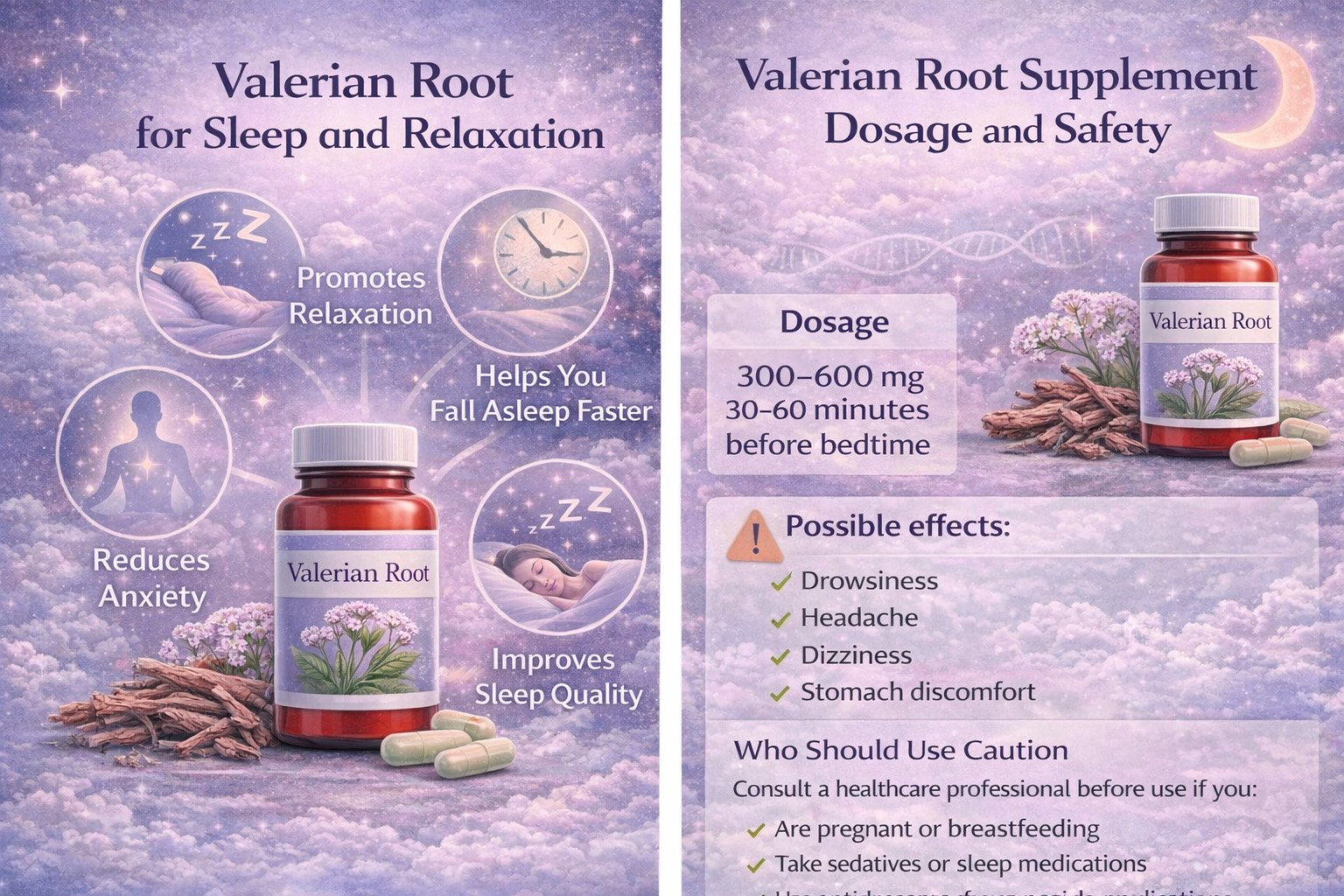
300–600 mg
30 to 60 minutes before bedtime
For sleep support, valerian root is typically taken:
Once daily in the evening
How Long Does Valerian Root Take to Work
Unlike melatonin, valerian root may take time to produce noticeable effects.
Some people experience benefits:
Within a few days
Others may need:
1 to 2 weeks of consistent use
Possible Side Effects
Valerian root is usually well tolerated.
Possible side effects may include:
- Drowsiness
- Headache
- Dizziness
- Stomach discomfort
Rare but possible:
- Vivid dreams
- Morning grogginess
Who Should Use Caution
Consult a healthcare professional before use if you:
- Are pregnant or breastfeeding
- Take sedatives or sleep medications
- Use antidepressants or anti-anxiety medications
- Have liver conditions
- Are scheduled for surgery
Evidence and Research
Scientific studies have evaluated valerian root for sleep and anxiety support.
Research suggests valerian root may:
Improve sleep quality
Reduce sleep latency
Promote relaxation
Support mild insomnia management
Reduce anxiety symptoms
Some clinical trials have shown improvements in:
- Sleep onset
- Sleep duration
- Sleep quality
- Subjective sleep satisfaction
However, results vary depending on:
- Dosage
- Duration of use
- Individual response
- Sleep habits
Valerian root is generally considered:
Moderate evidence
Low risk
Well tolerated
Best Valerian Root Supplements
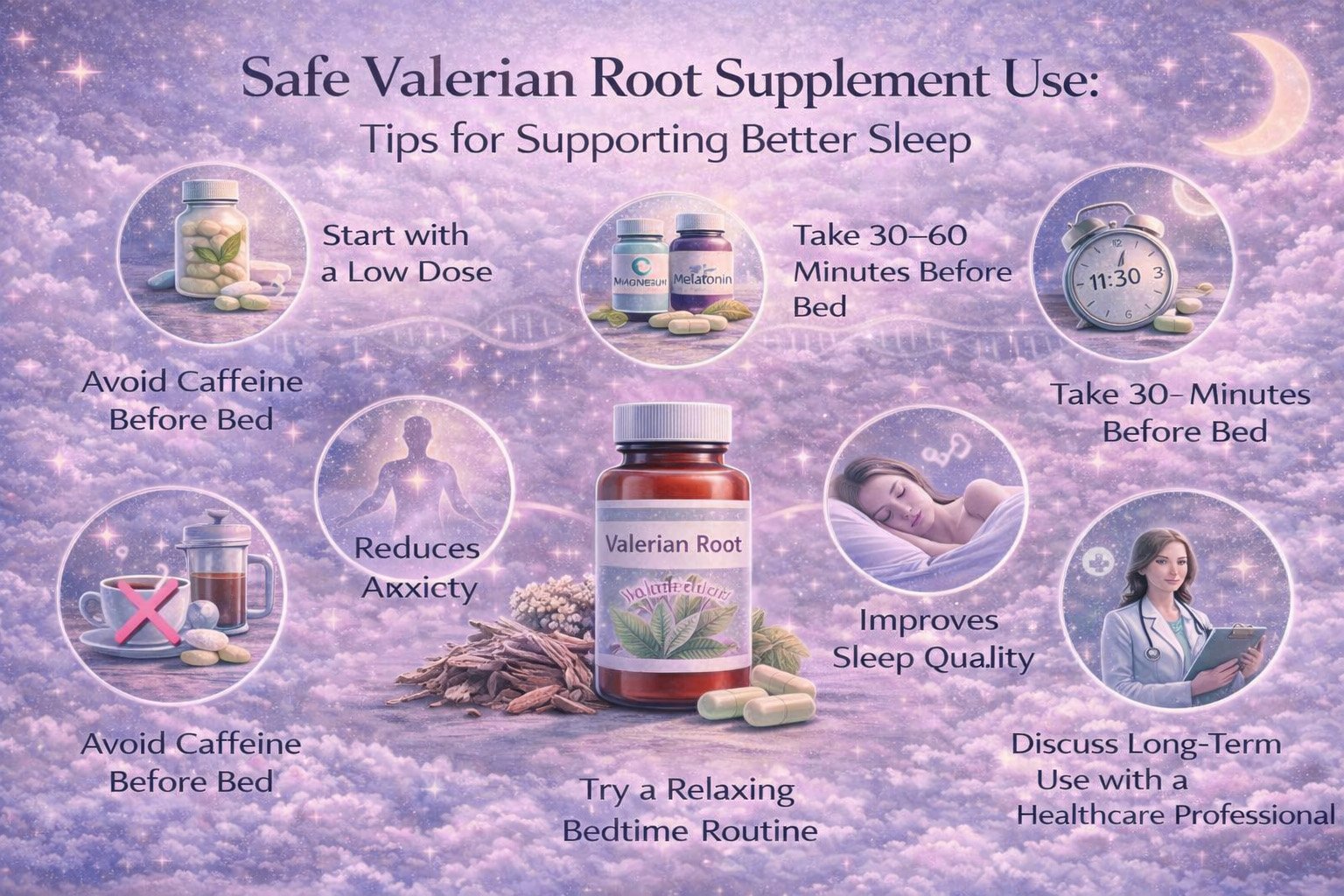
When choosing a high-quality valerian root supplement, look for:
- Standardized extract
- Third-party testing
- Transparent labeling
- Appropriate dosage (300–600 mg)
- Reputable manufacturers
Common supplement forms include:
- Capsules
- Tablets
- Liquid extracts
- Herbal tea
Some sleep formulas combine valerian root with:
- Magnesium
- Melatonin
- L-theanine
- Chamomile
- Lemon balm
These combinations may support relaxation and sleep through multiple pathways.
FAQ About Valerian Root
Does Valerian Root Make You Sleepy?
Valerian root promotes relaxation and may cause mild drowsiness, especially when taken before bedtime.
How Fast Does Valerian Root Work?
Some people notice effects within a few days, but optimal results may take:
1 to 2 weeks
Can You Take Valerian Root Every Night?
Yes.
Short-term nightly use is generally considered safe when taken within recommended doses.
Is Valerian Root Safe for Older Adults?
Yes.
It is commonly used by older adults for sleep support, but medical guidance is recommended for those taking medications.
Can Valerian Root Be Combined with Other Sleep Supplements?
Yes.
Valerian root is often combined with:
- Magnesium
- Melatonin
- L-theanine
These combinations may provide broader sleep support.
Medical Disclaimer
This content is for informational purposes only and does not constitute medical advice. Always consult a qualified healthcare professional.
Editorial Transparency
This article was created following evidence-based health content guidelines and reviewed by the VitaCoreBalance Editorial Team.