

Vitamin B Complex: Benefits, Deficiency Symptoms, and How It Supports Energy and Metabolism
VitaCoreBalance Editorial Team | Research-based health content • Editorial review process | March 2026 – Updated 07 April 2026
The Vitamin B Complex is a group of essential nutrients that play a central role in energy production, brain function, metabolism, and nervous system health. These vitamins help your body convert food into usable energy, support red blood cell formation, and maintain healthy skin, muscles, and organs.
Because the body does not store most B vitamins for long periods, consistent intake through diet or supplementation is critical—especially for adults experiencing fatigue, stress, poor diet, or metabolic challenges.
In this guide, you’ll learn:
- What Vitamin B Complex is
- The role of each B vitamin
- Signs of deficiency
- Health benefits
- Best food sources
- When supplementation may be helpful
What Is Vitamin B Complex?
Vitamin B Complex refers to a group of eight water-soluble vitamins that work together to support essential bodily functions, particularly those related to metabolism, energy, and brain health.
These vitamins include:
- Vitamin B1 (Thiamine)
- Vitamin B2 (Riboflavin)
- Vitamin B3 (Niacin)
- Vitamin B5 (Pantothenic Acid)
- Vitamin B6 (Pyridoxine)
- Vitamin B7 (Biotin)
- Vitamin B9 (Folate)
- Vitamin B12 (Cobalamin)
Each vitamin has a unique function, but they are often grouped together because they collaborate in the body’s metabolic processes.
Why Vitamin B Complex Is Important for Energy and Metabolism
B vitamins are essential for converting carbohydrates, fats, and proteins into usable energy. Without adequate levels, the body may struggle to maintain normal energy production and metabolic balance.
Key metabolic roles include:
- Supporting mitochondrial energy production
- Maintaining nervous system function
- Regulating hormone production
- Supporting red blood cell formation
- Assisting in DNA synthesis
- Supporting brain and cognitive health
This is why Vitamin B Complex is frequently associated with:
- Low energy
- Chronic fatigue
- Brain fog
- Stress
- Mood imbalance
- Slow metabolism
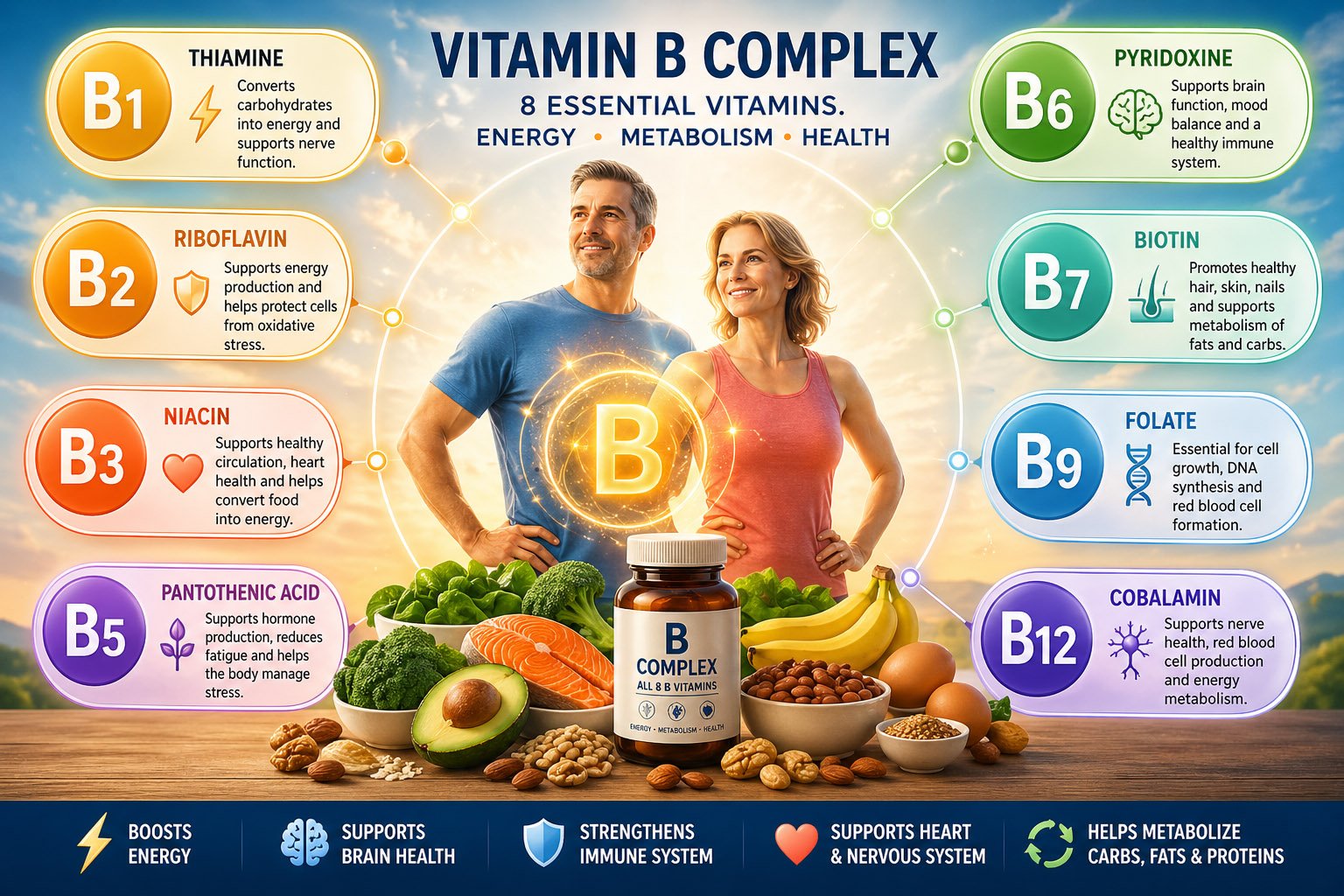
The 8 B Vitamins and Their Functions
Vitamin B1 (Thiamine)
Supports carbohydrate metabolism and nervous system health.
Main functions:
- Converts carbohydrates into energy
- Supports nerve function
- Maintains heart health
Deficiency symptoms:
- Fatigue
- Weakness
- Irritability
- Nerve problems
Vitamin B2 (Riboflavin)
Helps the body produce energy and maintain healthy skin and eyes.
Main functions:
- Supports cellular energy production
- Protects cells from oxidative stress
- Maintains skin and eye health
Deficiency symptoms:
- Cracked lips
- Sore throat
- Skin irritation
- Light sensitivity
Vitamin B3 (Niacin)
Supports metabolism, cholesterol regulation, and circulation.
Main functions:
- Helps convert food into energy
- Supports cardiovascular health
- Improves circulation
Deficiency symptoms:
- Fatigue
- Skin problems
- Digestive issues
- Brain fog
Vitamin B5 (Pantothenic Acid)
Essential for hormone production and energy metabolism.
Main functions:
- Supports adrenal function
- Helps produce hormones
- Supports stress response
Deficiency symptoms:
- Fatigue
- Headaches
- Sleep disturbances
- Irritability
Vitamin B6 (Pyridoxine)
Supports brain function and immune health.
Main functions:
- Produces neurotransmitters
- Supports immune system
- Regulates mood
Deficiency symptoms:
- Mood changes
- Depression
- Weak immune response
- Fatigue
Vitamin B7 (Biotin)
Supports hair, skin, nails, and metabolism.
Main functions:
- Supports fat metabolism
- Promotes healthy hair and nails
- Helps regulate blood sugar
Deficiency symptoms:
- Hair thinning
- Skin rash
- Fatigue
- Brittle nails
Vitamin B9 (Folate)
Essential for DNA production and red blood cell formation.
Main functions:
- Supports cell growth
- Prevents anemia
- Supports pregnancy health
Deficiency symptoms:
- Fatigue
- Weakness
- Pale skin
- Shortness of breath
Vitamin B12 (Cobalamin)
Critical for nerve health and red blood cell production.
Main functions:
- Maintains nervous system function
- Supports energy production
- Prevents anemia
Deficiency symptoms:
- Fatigue
- Numbness or tingling
- Memory problems
- Weakness
Signs of Vitamin B Complex Deficiency
Low levels of B vitamins can affect multiple systems in the body.
Common symptoms include:
- Persistent fatigue
- Brain fog
- Low energy
- Mood changes
- Weak immune system
- Hair thinning
- Pale skin
- Tingling in hands or feet
Risk groups include:
- Adults over 40
- People with poor diet
- Vegetarians and vegans
- Individuals with digestive disorders
- People under chronic stress
- Those taking certain medications
Health Benefits of Vitamin B Complex
Supports Energy Production
B vitamins help convert nutrients into energy, making them essential for daily function and stamina.
Supports Brain and Nervous System Health
Vitamin B Complex plays a major role in neurotransmitter production and cognitive function.
Benefits include:
- Improved focus
- Better memory
- Reduced brain fog
- Nervous system support
Helps Reduce Fatigue and Weakness
Low levels of B vitamins are strongly associated with fatigue.
Supplementation may help:
- Improve energy levels
- Reduce tiredness
- Support endurance
Supports Heart Health
Some B vitamins help regulate homocysteine levels, which are associated with cardiovascular risk.
Potential benefits:
- Improved circulation
- Reduced inflammation
- Cardiovascular protection
Supports Healthy Skin, Hair, and Nails
Biotin and other B vitamins are widely known for supporting skin and hair health.
Benefits include:
- Stronger nails
- Healthier hair
- Improved skin condition
Best Food Sources of Vitamin B Complex
You can obtain B vitamins from a balanced diet.
Top sources include:
Animal-based foods:
- Eggs
- Fish
- Poultry
- Meat
- Dairy
Plant-based foods:
- Whole grains
- Beans
- Lentils
- Leafy greens
- Nuts and seeds
- Bananas
However, modern diets, stress, and aging can increase the need for supplementation.
Who May Benefit from Vitamin B Complex Supplements
Supplementation may be helpful for:
- Adults over 40
- People with low energy
- Individuals with high stress levels
- Those with poor diet quality
- Vegetarians and vegans
- People with digestive problems
- Individuals with metabolic health concerns
How Much Vitamin B Complex Do You Need?
Recommended intake varies by vitamin and individual needs.
Typical daily ranges:
- B1: 1.1–1.2 mg
- B2: 1.1–1.3 mg
- B3: 14–16 mg
- B5: 5 mg
- B6: 1.3–1.7 mg
- Biotin: 30 mcg
- Folate: 400 mcg
- B12: 2.4 mcg
A balanced supplement usually provides safe, effective amounts of each vitamin.
Is Vitamin B Complex Safe?
Vitamin B Complex is generally safe because these vitamins are water-soluble, meaning excess amounts are typically excreted through urine.
However, very high doses may cause:
- Nausea
- Headaches
- Nerve irritation (rare)
- Digestive discomfort
Always follow recommended dosage guidelines.
Frequently Asked Questions (FAQ)
What does Vitamin B Complex do?
Vitamin B Complex helps convert food into energy, supports brain function, and maintains nervous system health.
Can Vitamin B Complex help with fatigue?
Yes. B vitamins play a key role in energy production, and deficiency is commonly linked to fatigue and low energy.
Is Vitamin B Complex good for metabolism?
Yes. These vitamins support metabolic processes that convert carbohydrates, fats, and proteins into energy.
When should I take Vitamin B Complex?
Most people take it in the morning because it supports energy production.
Can you take Vitamin B Complex every day?
Yes. Daily use is generally safe when taken within recommended amounts.
Medical Disclaimer
This content is for informational purposes only and does not constitute medical advice. Always consult a qualified healthcare professional.
Editorial Transparency
This article was created following evidence-based health content guidelines and reviewed by the VitaCoreBalance Editorial Team.
Sources:
- Vitamin B Complex and B Vitamins Overview – NHS
- Vitamin B-12 – Mayo Clinic
- Vitamin B-6 – Mayo Clinic
- B Vitamins: Functions and Uses in Medicine – National Library of Medicine (PMC)
- Vitamin B – National Center for Biotechnology Information (NCBI)
- Vitamin B-12 Sources and Functions – Harvard Health Publishing