
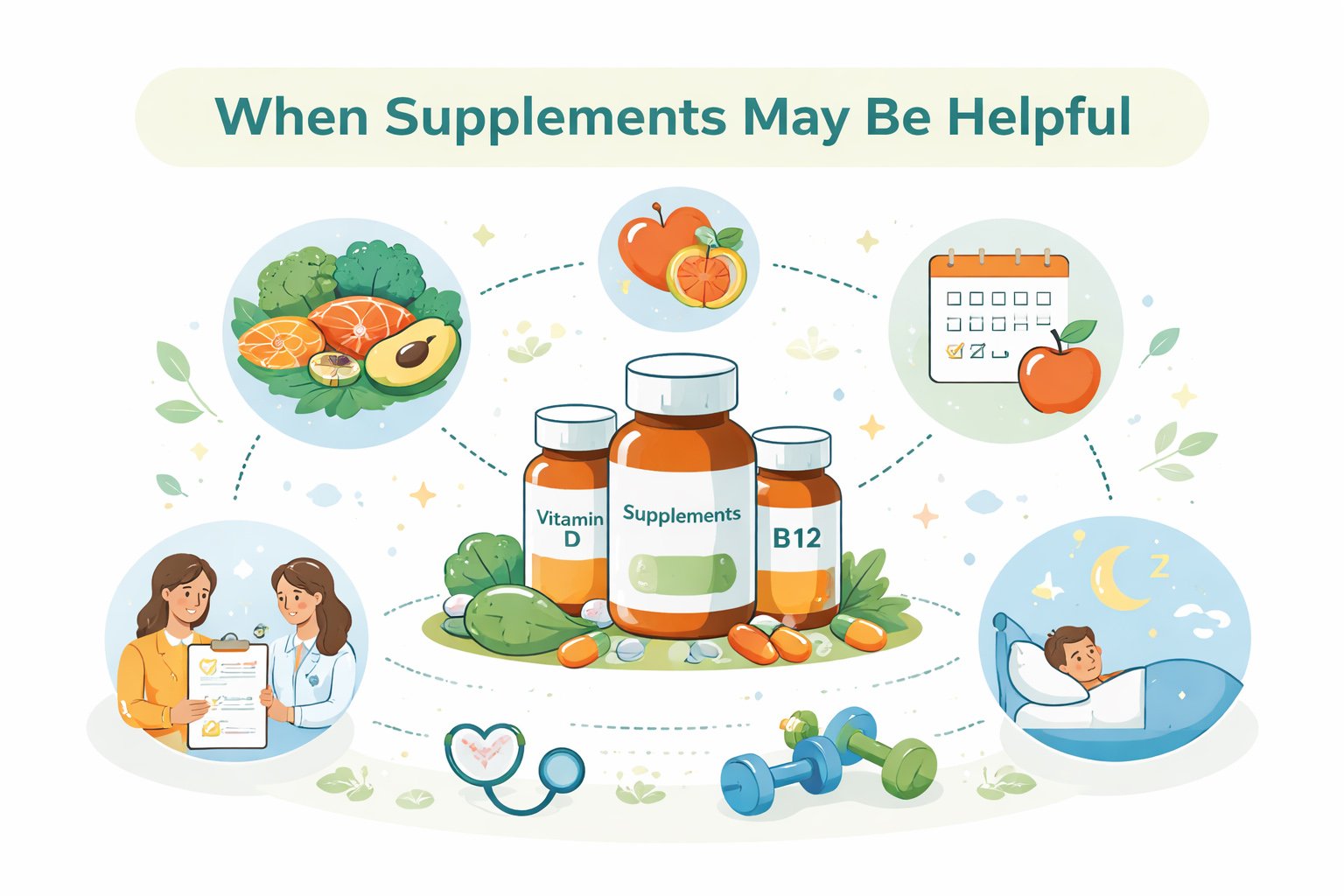
When Supplements May Be Helpful
Dietary supplements can play a meaningful role in health when used appropriately, for specific purposes, and with realistic expectations. They are not substitutes for a balanced diet, adequate sleep, physical activity, or medical care. However, in certain situations, supplements can help correct deficiencies, support physiological functions, or address increased nutritional demands.
Understanding when supplements may be helpful is essential for making informed decisions. The goal is not to promote unnecessary supplementation, but to recognize legitimate use cases where evidence supports their value.
1) When There Is a Confirmed Nutrient Deficiency
One of the clearest and most evidence-based reasons to use supplements is the presence of a documented deficiency. This may be identified through laboratory testing, clinical symptoms, or dietary assessment.
Nutrient deficiencies can develop for many reasons, including inadequate dietary intake, malabsorption, chronic illness, medication use, or increased physiological demands.
Common examples include:
- Vitamin D deficiency, particularly in individuals with limited sun exposure
- Iron deficiency, especially in menstruating women or people with chronic blood loss
- Vitamin B12 deficiency, more common in older adults and vegetarians or vegans
- Magnesium deficiency, associated with poor diet quality, stress, and certain medications
- Folate deficiency, particularly during pregnancy
In these cases, supplementation is not optional—it is often necessary to restore normal physiological function and prevent complications.
For example, untreated iron deficiency can lead to anemia, fatigue, impaired cognitive performance, and reduced physical capacity. Similarly, severe vitamin D deficiency can affect bone health, immune function, and muscle strength.
When deficiency is confirmed, supplementation is typically:
- Targeted
- Time-limited
- Evidence-based
- Monitored when appropriate
2) During Periods of Increased Physiological Demand
Certain life stages and conditions increase nutritional requirements beyond what diet alone can reliably provide. Supplements may help ensure adequate intake during these periods.
Pregnancy and Preconception
Pregnancy significantly increases the need for several nutrients, including:
- Folate
- Iron
- Iodine
- Vitamin D
- Omega-3 fatty acids (especially DHA)
Folate supplementation before and during early pregnancy is strongly supported by evidence and widely recommended to reduce the risk of neural tube defects.
Prenatal supplements are not a replacement for healthy eating, but they serve as a safety net during a time of increased nutritional demand.
Aging
As people age, several factors can impair nutrient absorption or increase requirements, including:
- Reduced stomach acid
- Changes in appetite
- Medication use
- Reduced sun exposure
- Chronic health conditions
Older adults are at higher risk of deficiencies in:
- Vitamin B12
- Vitamin D
- Calcium
- Magnesium
In these cases, targeted supplementation may support bone health, muscle function, cognitive health, and overall resilience.
Intense Physical Activity or Athletic Training
Athletes and physically active individuals may have higher nutritional needs due to increased energy expenditure, tissue repair, and metabolic demands.
Supplements may be helpful when:
- Training volume is high
- Recovery demands are significant
- Dietary intake is insufficient
- Specific performance or recovery goals are present
Examples include:
- Creatine for strength and high-intensity performance
- Protein supplements to support muscle repair and growth
- Electrolytes during prolonged exercise
- Iron in endurance athletes with documented deficiency
Importantly, performance supplements should be used strategically and based on individual needs—not marketing claims.
3) When Dietary Intake Is Limited or Restricted
Dietary patterns, lifestyle factors, and food availability can make it difficult to obtain adequate nutrition from food alone.
This does not imply that supplements are necessary for everyone, but in certain situations, they can help close nutritional gaps.
Vegetarian and Vegan Diets
Plant-based diets offer many health benefits, but some nutrients are more difficult to obtain without animal products.
Common nutrients of concern include:
- Vitamin B12
- Iron
- Zinc
- Omega-3 fatty acids
- Vitamin D
- Calcium
Vitamin B12 supplementation is particularly important for individuals who avoid animal products, as deficiency can lead to anemia and neurological complications.
Limited Food Variety or Poor Diet Quality
Busy schedules, financial constraints, limited cooking skills, or reliance on ultra-processed foods can reduce nutrient intake.
In these cases, supplements may serve as a practical bridge while dietary improvements are being implemented.
However, they should not be viewed as a permanent substitute for healthy eating.
Food Allergies or Intolerances
Individuals with food allergies or intolerances may avoid entire food groups, increasing the risk of nutrient deficiencies.
Examples include:
- Dairy avoidance increasing risk of low calcium intake
- Gluten-free diets sometimes associated with low fiber and certain micronutrients
- Multiple food allergies limiting dietary variety
Targeted supplementation can help maintain nutritional balance while respecting dietary restrictions.
4) When Medical Conditions Affect Nutrient Absorption
Some health conditions interfere with the body’s ability to absorb nutrients effectively.
In these situations, supplements may be necessary even when dietary intake appears adequate.
Examples include:
- Celiac disease
- Inflammatory bowel disease (IBD)
- Bariatric surgery
- Chronic kidney disease
- Pancreatic insufficiency
These conditions can affect absorption of:
- Iron
- Vitamin B12
- Fat-soluble vitamins (A, D, E, K)
- Calcium
- Magnesium
Supplementation in these contexts is typically guided by healthcare professionals and supported by laboratory monitoring.
5) When Sleep, Stress, or Lifestyle Factors Increase Physiological Strain
Modern lifestyles often involve chronic stress, irregular sleep schedules, and high cognitive demands. These factors can influence nutrient needs and physiological resilience.
Supplements may be helpful when lifestyle pressures exceed recovery capacity.
Examples include:
Poor Sleep or Circadian Disruption
Individuals experiencing:
- Insomnia
- Shift work
- Jet lag
- Irregular sleep schedules
may benefit from targeted interventions such as:
- Melatonin
- Magnesium
- L-theanine
These supplements do not replace healthy sleep habits, but they may support relaxation and sleep timing in specific situations.
Chronic Stress or Mental Fatigue
Persistent stress increases physiological demands on the nervous system and may affect mood, energy, and sleep quality.
Supplements sometimes used in this context include:
- Ashwagandha
- Magnesium
- B-complex vitamins
- Omega-3 fatty acids
The effectiveness of these interventions varies, but some evidence supports their role in stress resilience and mental well-being.
6) When Preventive Health Goals Are Clearly Defined
Some individuals use supplements proactively to support long-term health, particularly when risk factors are present.
This approach is most appropriate when:
- Risk is elevated
- Evidence supports the intervention
- Safety is well established
- Expectations are realistic
Examples include:
- Omega-3 fatty acids for cardiovascular health in individuals with low fish intake
- Vitamin D in populations with limited sun exposure
- Calcium and vitamin D for bone health in older adults
- Fiber supplements for digestive health
Preventive supplementation should be based on risk assessment—not general marketing claims.
When Supplements Are Less Likely to Be Helpful
Supplements are not universally beneficial, and in some cases they provide little value.
They are less likely to be helpful when:
- Diet quality is already adequate
- No deficiency or increased need is present
- Expectations are unrealistic
- The goal is vague or unsupported by evidence
- Multiple supplements are used without clear purpose
More is not always better. In some cases, excessive supplementation can increase risk rather than improve health.
A Practical Framework for Deciding
Before using a supplement, consider the following questions:
- Is there a specific need or deficiency?
- Is there evidence supporting its use for this purpose?
- Is the dose appropriate and safe?
- Is the supplement necessary, or can diet address the issue?
- Are potential interactions with medications considered?
If the answer to most of these questions is yes, supplementation may be reasonable.
The Bottom Line
Supplements can be helpful when used strategically, for specific reasons, and within a broader framework of healthy living. They are most valuable when addressing real needs—such as deficiencies, increased demands, or well-defined health goals.
They are least useful when used casually, excessively, or as substitutes for fundamental lifestyle habits.
The most effective approach is not to take more supplements, but to take the right ones—at the right time, for the right reason.
Our Evaluation Criteria
We evaluate supplements based on:
Scientific evidence
Safety profile
Quality of ingredients
Manufacturing standards
Transparency of labeling
The information on VitaCoreBalance is provided for educational and informational purposes only. Content within each health topic may reference scientific research but should not be considered medical advice, diagnosis, or treatment.
Always consult qualified healthcare professionals regarding personal health decisions.
Editorial Transparency
This article was created following evidence-based health content guidelines and reviewed by the VitaCoreBalance Editorial Team.