The Science of Aging
Understanding the Biological Processes That Shape Longevity and Health
VitaCoreBalance Editorial Team | Research-based health content • Editorial review process | March 2026
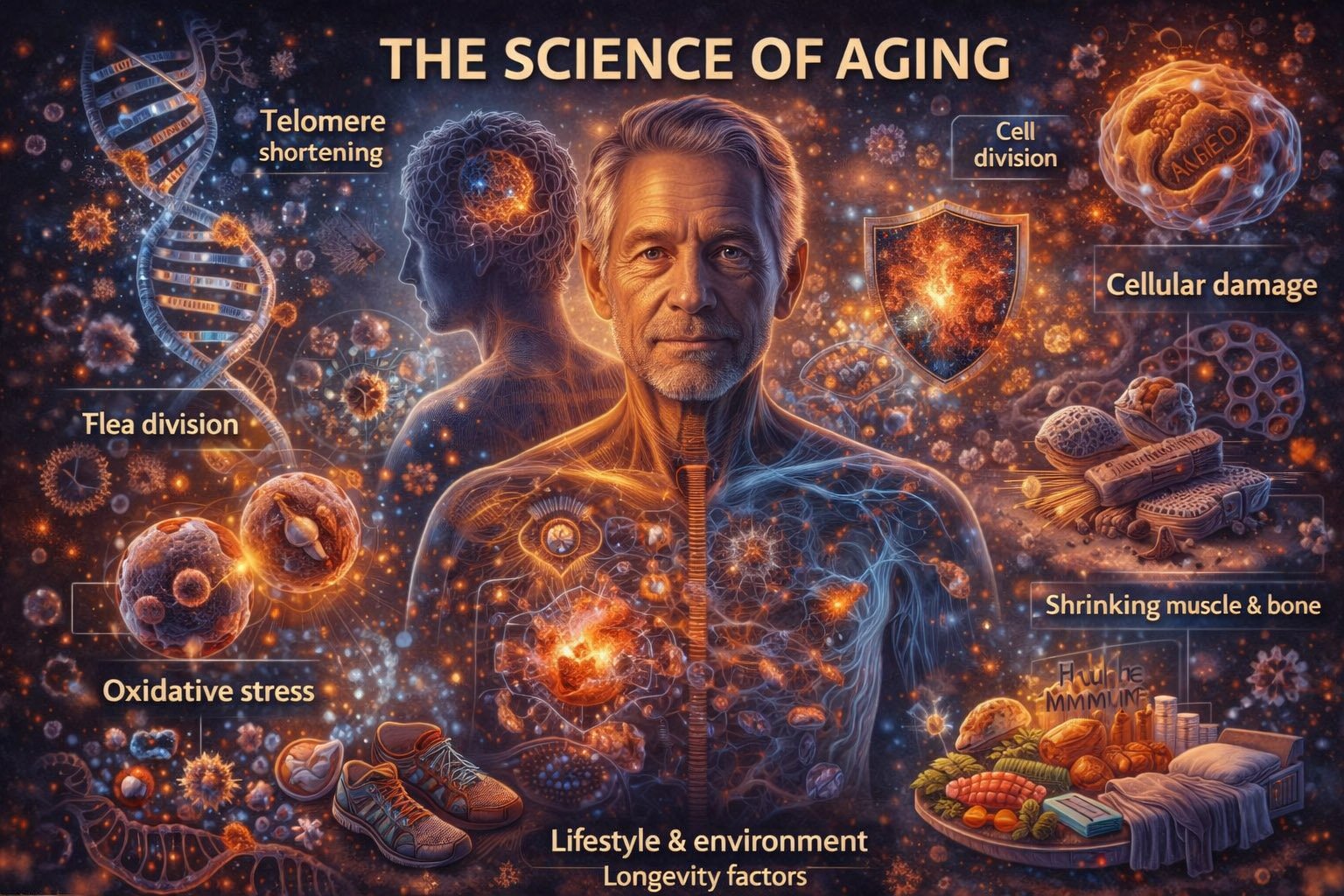
Aging is a universal biological process affecting every living organism. While often associated with decline, aging is more accurately understood as a gradual accumulation of biological changes that influence cellular function, tissue repair, and physiological resilience. Modern science views aging not as a single event but as a complex interaction of genetic, environmental, and lifestyle factors.
Advances in biology and medicine have transformed our understanding of aging. Researchers now recognize that aging is not entirely predetermined. Many aspects of the aging process can be influenced by behavior, environment, and preventive healthcare. This shift in perspective has led to new strategies aimed at extending healthspan—the period of life spent in good health—rather than simply increasing lifespan.
Understanding the science of aging provides valuable insight into disease prevention, physical performance, cognitive function, and long-term well-being.
Aging Begins at the Cellular Level
Cells Gradually Lose Efficiency Over Time
The biological foundation of aging lies in the gradual decline of cellular function. Cells experience wear and tear as they divide, repair damage, and respond to environmental stress.
Key cellular changes associated with aging include:
- Reduced DNA repair efficiency
- Accumulation of cellular damage
- Decreased energy production
- Slower cell division
- Increased inflammation
These changes do not occur suddenly. They develop slowly over decades, often beginning long before visible signs of aging appear.
Telomeres and Cellular Aging
Protective DNA Structures Shorten With Each Cell Division
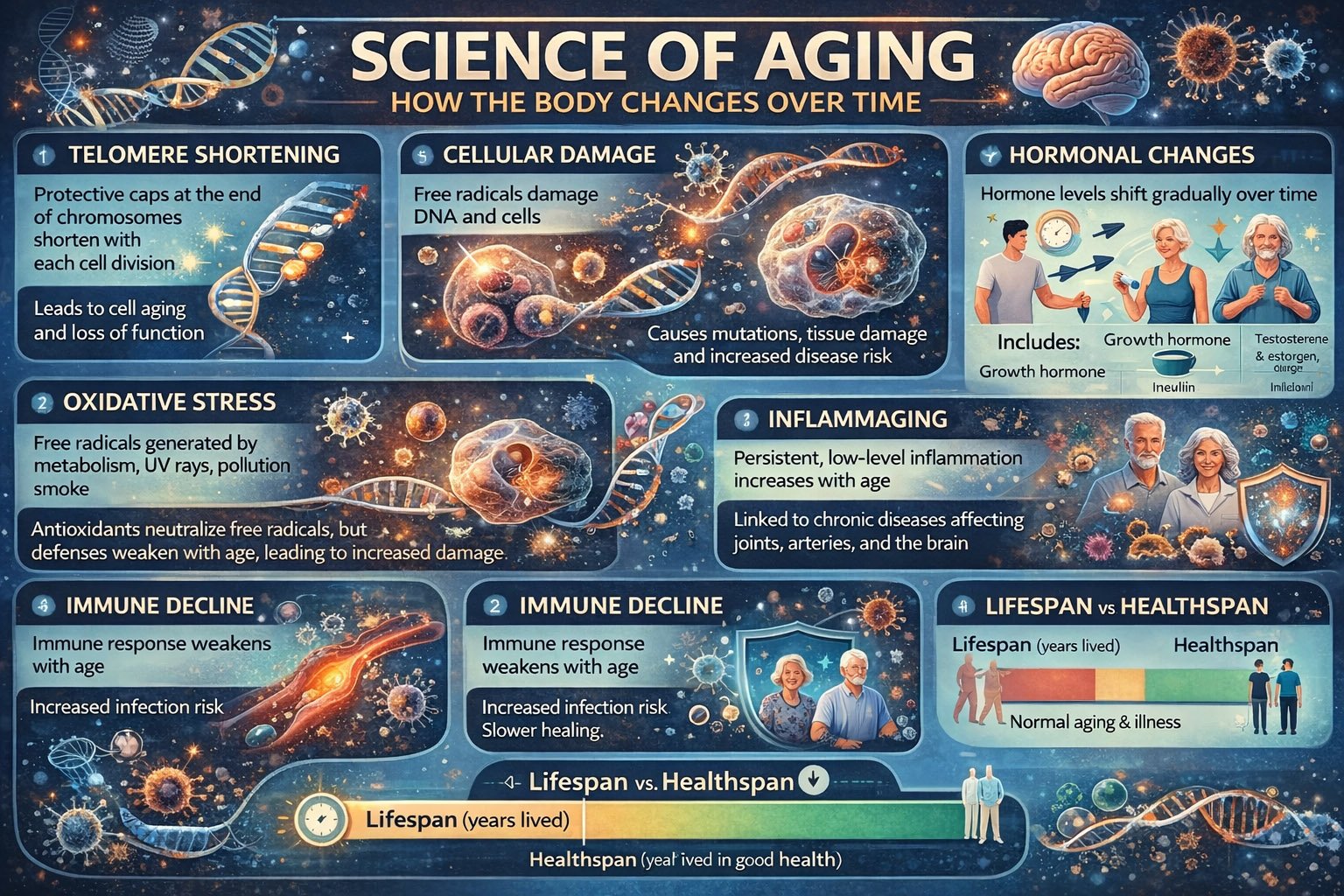
Telomeres are protective caps located at the ends of chromosomes. Their primary function is to preserve genetic stability during cell division.
Each time a cell divides:
Telomeres become slightly shorter.
When telomeres reach a critical length:
Cells lose the ability to divide effectively.
This process contributes to:
- Tissue aging
- Reduced healing capacity
- Increased disease risk
Telomere shortening is considered one of the key biological markers of aging.
However, telomere length is influenced by lifestyle factors such as:
- Physical activity
- Nutrition
- Stress levels
- Sleep quality
- Environmental exposure
Oxidative Stress and Cellular Damage
Free Radicals Contribute to Aging
Oxidative stress occurs when unstable molecules known as free radicals damage cells.
Free radicals are produced during:
- Normal metabolism
- Exposure to pollution
- Ultraviolet radiation
- Smoking
- Inflammation
Over time, oxidative stress can damage:
- DNA
- Proteins
- Cell membranes
This damage contributes to:
- Wrinkles
- Reduced organ function
- Chronic disease risk
- Slower recovery
Antioxidant systems within the body help neutralize free radicals, but their efficiency may decline with age.
The Role of Inflammation
Chronic Low-Level Inflammation Increases With Age
Aging is often associated with persistent, low-level inflammation.
This condition is sometimes called:
Inflammaging.
Unlike acute inflammation, which helps the body heal injuries, chronic inflammation can damage tissues and increase disease risk.
Conditions linked to chronic inflammation include:
- Cardiovascular disease
- Diabetes
- Arthritis
- Neurodegenerative disorders
Managing inflammation through lifestyle and preventive healthcare is a major focus of aging research.
Muscle and Bone Changes
Physical Strength Can Decline Without Intervention
Loss of muscle mass and bone density is a common feature of aging.
These changes are influenced by:
- Reduced physical activity
- Hormonal shifts
- Nutritional factors
- Chronic disease
However, these changes are not inevitable.
Research shows that regular physical activity can significantly slow age-related decline.
Key protective behaviors include:
- Strength training
- Weight-bearing exercise
- Adequate protein intake
- Vitamin D and calcium support
Maintaining muscle and bone health helps preserve independence and mobility later in life.
Brain Function and Cognitive Aging
The Brain Remains Adaptable Throughout Life
Cognitive decline is often assumed to be unavoidable, but modern neuroscience has shown that the brain retains the ability to adapt and form new connections throughout life.
This ability is called:
Neuroplasticity.
Neuroplasticity allows the brain to:
- Learn new skills
- Recover from injury
- Adapt to change
- Maintain memory function
Factors that support brain health include:
- Mental stimulation
- Physical activity
- Social interaction
- Sleep quality
- Balanced nutrition
Healthy lifestyle habits can significantly reduce the risk of cognitive decline.
Hormonal Changes With Age
Hormone Levels Shift Gradually Over Time
Hormones regulate many physiological processes, including metabolism, mood, and energy levels.
As people age, hormone production may change.
Examples include:
- Reduced growth hormone
- Changes in sex hormones
- Altered insulin sensitivity
- Slower metabolic rate
These changes can influence:
- Body composition
- Energy levels
- Sleep patterns
- Bone density
Understanding hormonal changes helps guide preventive healthcare strategies.
The Immune System and Aging
Immune Responses Become Less Efficient
The immune system undergoes gradual changes with age.
This process is known as:
Immunosenescence.
Common effects include:
- Slower immune response
- Reduced vaccine effectiveness
- Increased infection risk
- Delayed healing
Despite these changes, immune function can be supported through:
- Vaccination
- Physical activity
- Balanced nutrition
- Adequate sleep
- Stress management
Lifestyle and Longevity
Daily Habits Have a Major Impact on Aging
Research consistently shows that lifestyle plays a central role in determining how people age.
Key lifestyle factors include:
- Physical activity
- Nutrition
- Sleep
- Stress management
- Social connection
- Preventive healthcare
These factors influence:
- Disease risk
- Functional ability
- Cognitive performance
- Quality of life
- Longevity
Healthy habits can delay the onset of many age-related conditions.
The Difference Between Lifespan and Healthspan
Two important concepts in aging research are:
Lifespan
— Total years lived
Healthspan
— Years lived in good health
Modern medicine increasingly focuses on extending healthspan rather than simply increasing lifespan.
The goal is not only to live longer but to maintain independence, mobility, and well-being throughout life.
Conclusion
Aging is a complex biological process shaped by cellular changes, environmental influences, and daily habits. While aging cannot be stopped, scientific research shows that many aspects of the process can be influenced through preventive care and healthy behavior.
Understanding the science of aging empowers individuals to make informed decisions that support long-term health, resilience, and quality of life. As research continues to advance, new strategies may further improve how people age, helping individuals remain active and healthy for longer.
Medical Disclaimer
This content is for informational purposes only and does not constitute medical advice. Always consult a qualified healthcare professional.
Editorial Transparency
This article was created following evidence-based health content guidelines and reviewed by the VitaCoreBalance Editorial Team.
Sources
World Health Organization (WHO)
https://www.who.int
National Institute on Aging (NIA)
https://www.nia.nih.gov
Centers for Disease Control and Prevention (CDC)
https://www.cdc.gov
National Institutes of Health (NIH)
https://www.nih.gov
Mayo Clinic
https://www.mayoclinic.org
Cleveland Clinic
https://my.clevelandclinic.org