

What Is Blood Sugar?
VitaCoreBalance Editorial Team | Research-based health content • Editorial review process | March 2026
Introduction: The Foundation of Metabolic Health
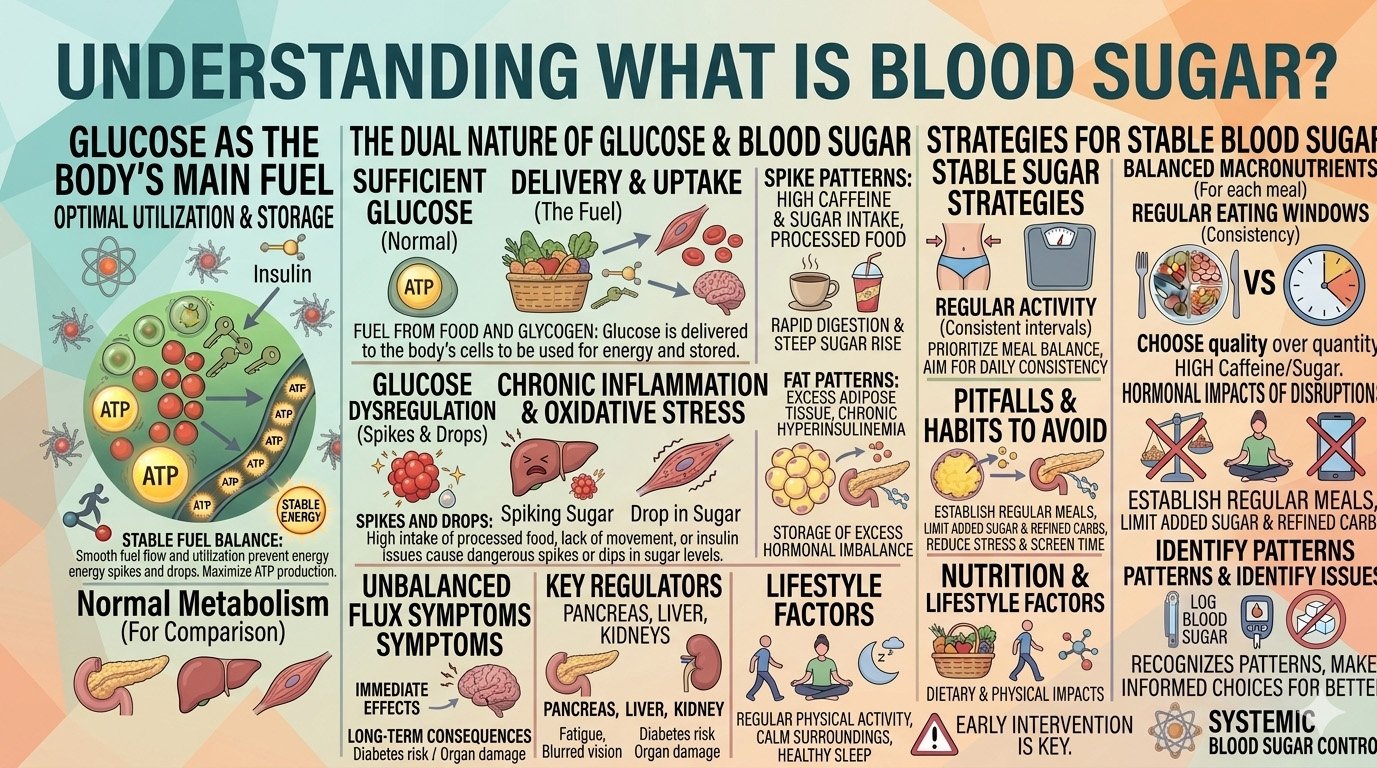
Blood sugar is one of the most important indicators of overall health. It reflects how the body uses energy, regulates hormones, and maintains balance across multiple systems. Every cell in the body depends on glucose as a primary fuel source, making blood sugar regulation essential for physical performance, brain function, and long-term health.
Blood sugar levels are influenced by daily habits such as diet, sleep, stress, and physical activity. These factors interact closely with Metabolism, Nutrition, and Hormone Health, as well as cardiovascular function and energy regulation. When blood sugar remains stable, the body operates efficiently. When levels fluctuate too much or remain elevated, the risk of chronic disease increases.
Understanding what blood sugar is—and how it works—provides the foundation for managing energy, preventing metabolic disorders, and supporting overall health.
What Is Blood Sugar?
Blood sugar, also called blood glucose, refers to the amount of glucose circulating in the bloodstream at any given time. Glucose is a type of sugar that comes primarily from the carbohydrates in food.
The body uses glucose to:
- Produce energy
- Support brain function
- Fuel muscles
- Maintain organ function
- Regulate metabolism
Blood sugar levels naturally rise after eating and fall between meals. This cycle is carefully controlled by hormones, especially insulin and glucagon, to ensure that cells receive a steady supply of energy.
Maintaining healthy blood sugar levels is central to Blood Sugar regulation and daily Energy & Fatigue balance.
Where Does Blood Sugar Come From?
Blood sugar comes from three primary sources.
1) Food
Carbohydrates in food are broken down into glucose during digestion.
Common sources include:
- Bread
- Rice
- Fruits
- Vegetables
- Dairy products
- Legumes
These foods provide the body’s main source of energy.
2) The Liver
The liver stores excess glucose in a form called glycogen.
When blood sugar drops, the liver releases stored glucose to maintain stable levels between meals or during sleep.
This process supports stable energy and metabolic balance.
3) The Body’s Own Production
When necessary, the body can produce glucose from non-carbohydrate sources such as protein.
This process helps maintain energy during fasting or prolonged activity.
It is an essential function of Metabolism.
How Blood Sugar Is Regulated (Physiology)
Blood sugar regulation depends on a coordinated system involving hormones, organs, and metabolic signals.
Insulin: The Primary Regulator
Insulin is a hormone produced by the pancreas.
It helps:
- Move glucose into cells
- Lower blood sugar levels
- Store excess energy
Without adequate insulin function, blood sugar levels can remain elevated.
Glucagon: The Counterbalance Hormone
Glucagon works in the opposite direction of insulin.
It helps:
- Raise blood sugar when levels are low
- Release stored glucose from the liver
- Maintain energy between meals
Together, insulin and glucagon maintain stable glucose levels.
Other Hormones That Influence Blood Sugar
Several hormones affect glucose regulation.
These include:
- Cortisol
- Adrenaline
- Growth hormone
- Thyroid hormones
These hormones connect blood sugar regulation to Hormone Health and overall metabolic function.
Normal Blood Sugar Levels
Healthy blood sugar levels vary depending on timing and individual health status.
Typical ranges for adults:
Fasting blood sugar:
70 to 99 mg/dL
After meals:
Less than 140 mg/dL
Prediabetes:
100 to 125 mg/dL (fasting)
Diabetes:
126 mg/dL or higher (fasting)
These ranges are widely used in clinical practice to evaluate metabolic health.
Why Blood Sugar Levels Matter
Blood sugar affects nearly every system in the body.
Stable levels support:
- Consistent energy
- Clear thinking
- Healthy metabolism
- Hormone balance
- Cardiovascular health
Unstable or elevated blood sugar can lead to:
- Fatigue
- Brain fog
- Increased hunger
- Weight gain
- Chronic inflammation
Long-term imbalance is strongly associated with poor Heart Health and metabolic disease.
Factors That Affect Blood Sugar Levels
Blood sugar is influenced by both lifestyle and biological factors.
Diet
The type and amount of carbohydrates consumed directly affect glucose levels.
High-impact foods include:
- Sugary beverages
- Refined carbohydrates
- Processed foods
Balanced meals help stabilize blood sugar and support Nutrition.
Physical Activity
Movement helps muscles use glucose for energy.
Regular activity can:
- Lower blood sugar
- Improve insulin sensitivity
- Increase energy
Physical activity supports both Metabolism and long-term health.
Sleep
Sleep plays a critical role in hormone regulation.
Poor sleep can:
- Increase cortisol
- Raise blood sugar
- Increase hunger
Healthy sleep supports stable Sleep Health and metabolic balance.
Stress
Stress triggers hormone release that can increase blood sugar.
Chronic stress can lead to:
- Elevated glucose
- Increased appetite
- Fatigue
Stress management supports both Hormone Health and blood sugar regulation.
Common Symptoms of High or Low Blood Sugar
Recognizing symptoms can help identify blood sugar problems early.
High Blood Sugar (Hyperglycemia)
Common symptoms include:
- Increased thirst
- Frequent urination
- Fatigue
- Blurred vision
- Slow wound healing
Low Blood Sugar (Hypoglycemia)
Common symptoms include:
- Shaking
- Dizziness
- Sweating
- Hunger
- Confusion
Both conditions can affect daily Energy & Fatigue patterns.
Conditions Related to Blood Sugar
Several health conditions are directly linked to blood sugar regulation.
Prediabetes
A condition in which blood sugar levels are higher than normal but not yet in the diabetes range.
Early lifestyle changes can significantly reduce risk.
Type 2 Diabetes
A chronic condition characterized by persistent high blood sugar due to insulin resistance or reduced insulin production.
Insulin Resistance
A condition in which cells respond poorly to insulin.
This condition often develops gradually and is strongly associated with metabolic dysfunction.
It is closely linked to Metabolism and long-term health outcomes.
Practical Strategies to Maintain Healthy Blood Sugar
Maintaining stable blood sugar involves consistent daily habits.
Eat Balanced Meals
Include:
- Fiber
- Protein
- Healthy fats
- Complex carbohydrates
Balanced meals help prevent rapid glucose changes.
Stay Physically Active
Regular movement improves glucose control and energy regulation.
Maintain a Healthy Weight
Healthy body weight improves insulin sensitivity and reduces metabolic risk.
This is closely connected to Weight Loss and long-term health.
Get Enough Sleep
Consistent sleep supports hormone balance and glucose stability.
Manage Stress
Reducing stress helps stabilize hormones and maintain healthy blood sugar.
Why Understanding Blood Sugar Is Important
Blood sugar is a central marker of metabolic health.
Maintaining stable levels helps:
- Prevent chronic disease
- Support long-term energy
- Protect cardiovascular health
- Improve quality of life
Early awareness and consistent habits can significantly reduce long-term health risks.
Final Thoughts: Blood Sugar Is the Core of Energy and Health
Blood sugar is more than a number—it is a reflection of how the body manages energy.
Stable glucose levels support:
- Healthy metabolism
- Balanced hormones
- Consistent energy
- Long-term health
Understanding blood sugar provides the foundation for making informed decisions about diet, sleep, activity, and overall wellness.
Maintaining healthy Blood Sugar, supporting Metabolism, and protecting Hormone Health are essential steps toward long-term health and disease prevention.
FAQ
What is the main purpose of blood sugar?
Blood sugar provides energy for the body’s cells, especially the brain and muscles.
Is blood sugar the same as glucose?
Yes. Blood sugar and blood glucose refer to the same substance circulating in the bloodstream.
Can blood sugar change throughout the day?
Yes. Blood sugar naturally rises after eating and falls between meals.
What is the normal blood sugar level?
For most adults, fasting blood sugar typically ranges from 70 to 99 mg/dL.
Medical Disclaimer
This content is for informational purposes only and does not constitute medical advice. Always consult a qualified healthcare professional.
Editorial Transparency
This article was created following evidence-based health content guidelines and reviewed by the VitaCoreBalance Editorial Team.
Sources
Centers for Disease Control and Prevention (CDC)
Blood Glucose and Diabetes
National Institute of Diabetes and Digestive and Kidney Diseases (NIDDK)
American Diabetes Association (ADA)
World Health Organization (WHO)
American Association of Clinical Endocrinology (AACE)
Clinical Practice Guidelines for Diabetes Management