What Is Metabolism?
VitaCoreBalance Editorial Team | Research-based health content • Editorial review process | March 2026
How Your Body Produces Energy
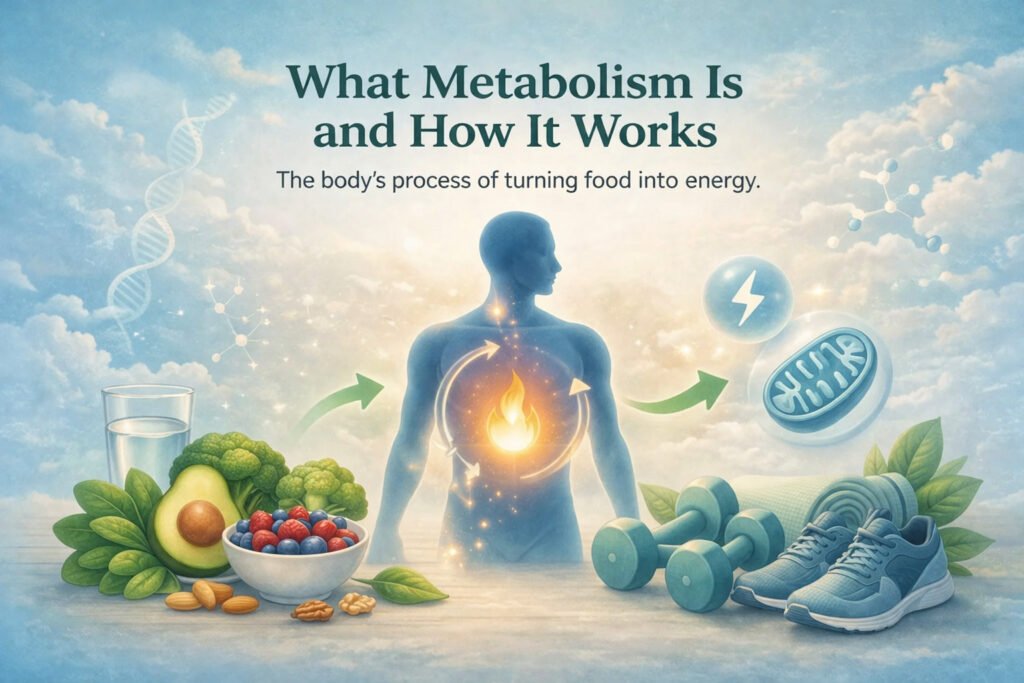
Metabolism is one of the most essential processes in the human body. But what is metabolism exactly? It is the system responsible for converting food into energy, allowing your body to function, repair itself, and maintain balance.
Many people think metabolism is only related to weight loss. However, metabolism affects nearly every process in the body, including breathing, circulation, digestion, and cellular repair. Understanding what metabolism is can help you improve your health and daily energy levels.
What Is Metabolism?
So, what is metabolism in simple terms? Metabolism refers to all the chemical reactions that occur inside your body to convert food into usable energy. This energy is required for everything from basic survival to physical activity.
Even at rest, your body needs energy. This is known as the basal metabolic rate (BMR), which represents the calories your body burns to maintain essential functions like breathing and circulation.
The Two Main Types of Metabolism
To fully understand what metabolism is, it is important to know that it includes two main processes.
1. Catabolism
Catabolism is the process of breaking down nutrients to release energy. When you eat, your body converts food into smaller molecules that can be used as fuel.
Examples include:
-
Breaking down glucose for energy
-
Converting fat into fuel
-
Digesting protein into amino acids
2. Anabolism
Anabolism is the process of building and repairing tissues. It uses energy to create structures that the body needs to function properly.
Examples include:
-
Building muscle
-
Repairing cells
-
Producing hormones
A healthy metabolism depends on the balance between these two processes.
What Affects Metabolism?
Several factors influence how your metabolism works and how efficiently your body produces energy.
Age
Metabolism naturally slows over time, especially after the age of 30. This is often due to changes in hormones and muscle mass. Learn more about this in our guide to metabolism after 40.
Muscle Mass
Muscle burns more calories than fat, even at rest. This means that increasing muscle mass can help support a faster metabolism.
Hormones
Hormones play a key role in metabolism. They regulate how your body uses and stores energy. To understand this better, explore how hormones control metabolism.
Physical Activity
Exercise and daily movement increase the number of calories your body burns. This helps improve metabolic efficiency over time.
Nutrition
The foods you eat directly impact metabolism. Some foods require more energy to digest and can support energy production. Learn more in our guide to foods that boost metabolism.
Signs of a Slow Metabolism
If you are wondering what metabolism is doing in your body, certain signs may indicate that it is slowing down:
-
Weight gain
-
Low energy levels
-
Difficulty losing weight
-
Increased body fat
-
Slower recovery
You can explore these further in our guide on slow metabolism symptoms.
How to Improve Metabolism
Now that you understand what metabolism is, the next step is knowing how to support it.
You can improve your metabolism by:
-
Exercising regularly
-
Building muscle
-
Eating balanced meals
-
Getting enough sleep
-
Managing stress
For a deeper guide, see how to boost metabolism naturally.
Metabolism and Long-Term Health
Understanding what metabolism is is essential for long-term health. A healthy metabolism supports energy levels, hormone balance, and overall well-being.
Poor metabolic health is linked to chronic diseases such as obesity, diabetes, and heart disease. Supporting your metabolism can help reduce these risks.
Final Thoughts
So, what is metabolism? It is the system that powers your entire body. It converts nutrients into energy and supports every essential function.
By understanding what metabolism is and how it works, you can make better lifestyle choices and improve your long-term health.
Further Reading
Medical Disclaimer
This content is for informational purposes only and does not constitute medical advice. Always consult a qualified healthcare professional.
Editorial Transparency
This article was created following evidence-based health content guidelines and reviewed by the VitaCoreBalance Editorial Team.