

Metabolism

Metabolism: Understanding How Your Body Produces and Uses Energy

VitaCoreBalance Editorial Team | Research-based health content • Editorial review process | March 2026

Metabolism is the foundation of how your body produces, uses, and regulates energy. It includes all the chemical processes that allow the body to convert food into fuel, maintain vital functions, repair tissues, and sustain life at the cellular level.

Every second, millions of biochemical reactions take place inside your cells. These reactions transform nutrients into energy that powers essential processes such as breathing, circulation, digestion, brain activity, and temperature regulation. Without metabolism, the body would not be able to maintain balance or support even the most basic functions required for survival.

When people refer to a “fast” or “slow” metabolism, they are usually describing how efficiently the body converts calories into usable energy. In reality, metabolism is influenced by multiple factors, including genetics, age, muscle mass, hormone levels, physical activity, and daily habits.

Understanding how metabolism works is essential for improving energy levels, managing body weight, and supporting long-term health. It also helps explain how lifestyle choices—such as nutrition, exercise, sleep, and stress—directly impact overall metabolic function.

Understanding metabolism also requires looking at how it connects to Hormone Health, particularly the role of insulin and thyroid hormones, as well as Nutrition, which provides the essential fuel for metabolic processes.


What Is Metabolism?

Metabolism refers to the complex network of biochemical reactions that occur within the body to sustain life. These processes convert nutrients from food into energy and essential molecules needed for growth, repair, and maintenance.

According to MedlinePlus (NIH), metabolism includes all chemical processes that convert food into energy and sustain life.

Every cell depends on metabolism to function properly. Even when the body is at rest, metabolic activity continues to support vital processes such as heart function, breathing, and cellular repair. This baseline energy expenditure is known as the basal metabolic rate (BMR).

This foundational energy demand is closely linked to Energy & Fatigue, as disruptions in metabolic efficiency can directly impact how the body produces and sustains energy throughout the day.

Research from Harvard T.H. Chan School of Public Health highlights that BMR accounts for the majority of daily energy expenditure.

For a deeper explanation of these processes, see our complete guide on what metabolism is and how it works.


The Two Core Processes of Metabolism

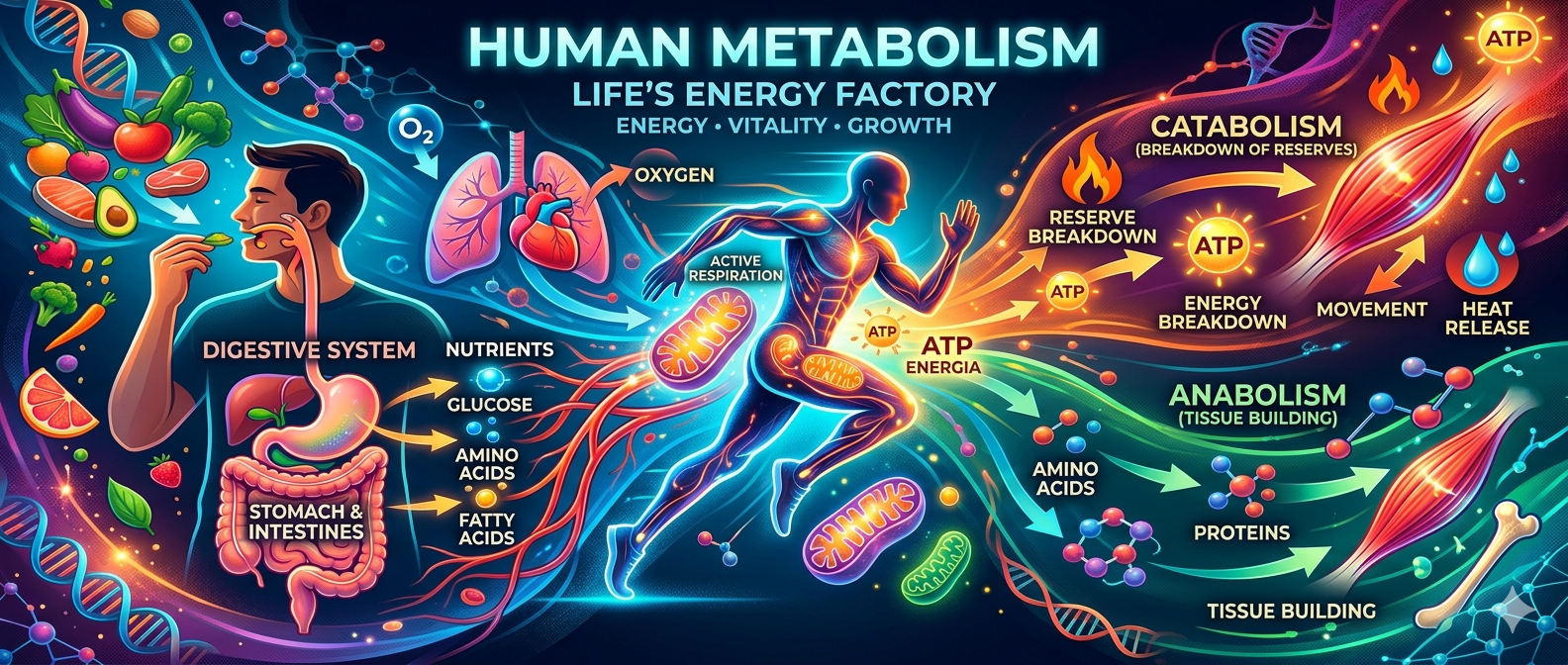
Metabolism is made up of two interconnected systems that work together to maintain balance and energy flow in the body.

Catabolism (Energy Release)

Catabolism involves breaking down nutrients into smaller molecules to release energy. This process allows the body to use food as fuel.

For example:

  • Carbohydrates are converted into glucose

  • Fats are broken down into fatty acids

  • Proteins are broken down into amino acids

These molecules are then used to produce cellular energy that supports all bodily functions.


Anabolism (Building and Repair)

Anabolism is responsible for building and repairing tissues. It uses energy generated through catabolism to create essential structures in the body.

Examples include:

  • Building muscle tissue

  • Producing hormones and enzymes

  • Repairing damaged cells

  • Synthesizing proteins and structural components

A healthy metabolism depends on a balance between these two processes, ensuring that the body can both generate energy and maintain its structure.


How Metabolism Works

Metabolism operates through a series of biochemical pathways that convert nutrients into usable energy. One of the most important molecules produced in this process is ATP (adenosine triphosphate), often referred to as the body’s primary energy currency.

This process depends heavily on stable Blood Sugar regulation, since glucose is one of the main substrates used to generate cellular energy.

When food is digested and absorbed, nutrients enter metabolic pathways that generate ATP. This energy is then used to support:

  • Brain activity and nervous system function

  • Muscle contraction and physical movement

  • Circulation and heart function

  • Cellular repair and regeneration

  • Regulation of body temperature

Several organs and systems play a key role in metabolic function:

  • Liver – Processes nutrients and regulates blood sugar levels

  • Pancreas – Produces insulin and glucagon for glucose control

  • Muscles – Major contributors to energy expenditure

  • Endocrine system – Regulates metabolism through hormones

This highlights the critical role of Hormone Health, as hormonal signals directly influence how efficiently the body produces, stores, and uses energy.

Because metabolism affects nearly every biological system, maintaining metabolic balance is essential for overall health.


Key Factors That Influence Metabolism

Metabolic rate varies between individuals and is shaped by both biological and lifestyle factors.

Age

Metabolism naturally slows over time, particularly after the age of 30 or 40. This is often due to changes in hormone levels and reductions in muscle mass. Learn more about this in our guide to metabolism after 40.


Body Composition

Muscle tissue burns more calories than fat tissue, even at rest. Individuals with higher muscle mass generally have a faster metabolism and greater energy expenditure.


Hormonal Regulation

Hormones play a central role in controlling metabolic processes. Key hormones include:

Clinical sources such as the Mayo Clinic emphasize the role of thyroid hormones in regulating metabolic rate.

  • Thyroid hormones (regulate metabolic rate)

  • Insulin (controls blood sugar metabolism)

  • Cortisol (affects energy balance and stress response)

  • Sex hormones (influence body composition and metabolism)

To better understand this relationship, explore how hormones affect metabolism.


Physical Activity

Exercise and daily movement significantly increase energy expenditure. Both resistance training and aerobic exercise can improve metabolic efficiency and support long-term health.


Nutrition

The quality and composition of your diet directly affect metabolic function. Balanced meals that include protein, healthy fats, and fiber can support stable energy levels and efficient nutrient processing. Learn more in our guide to foods that support metabolism.

This is why Nutrition is one of the most powerful tools for supporting metabolic efficiency and long-term health.

Sleep quality is another key factor, making Sleep Health an essential component of metabolic regulation and overall energy balance.


Metabolism After 40

Many individuals notice changes in metabolism after the age of 40. These changes are often associated with natural physiological shifts, including:

  • Decreased muscle mass

  • Hormonal changes

  • Lower resting metabolic rate

  • Changes in body composition

However, lifestyle choices remain extremely important. Strength training, proper nutrition, quality sleep, and stress management can help maintain metabolic health at any age.

These changes can also influence Weight Loss, as shifts in metabolism and hormones may affect how the body stores and burns energy over time.

Human metabolism illustration showing digestive system, energy production, and nutrient processing

Explore Our Metabolism Guides

This page serves as the central hub for all metabolism-related content. Below, you can explore detailed guides covering key aspects of metabolic health:

Many of these processes are deeply connected to areas such as Blood Sugar regulation, Hormone Health, and overall Nutrition, which together shape metabolic performance.

Each of these articles explores a critical component of how the body produces and uses energy.


Why Metabolic Health Matters

Metabolic health goes far beyond weight management. It plays a crucial role in:

  • Energy production

  • Hormonal balance

  • Blood sugar regulation
    which is closely tied to Blood Sugar balance and plays a central role in preventing metabolic disorders.

  • Cardiovascular health
    a topic explored further in Heart Health, where metabolic dysfunction is a major risk factor.

  • Immune function

When metabolism functions properly, the body can maintain stable energy levels, regulate appetite, and reduce the risk of chronic diseases such as obesity, type 2 diabetes, and heart disease.

Related Health Topics

You may also be interested in exploring other areas related to metabolic function and overall health:

Blood Sugar Health
• Weight Loss
• Hormone Health
• Nutrition
• Energy & Fatigue


Final Thoughts

Metabolism is the system that powers every function in the human body. It determines how energy is produced, used, and stored, influencing nearly every aspect of health.

Although metabolism is affected by genetics and age, daily lifestyle habits remain one of the most powerful ways to support metabolic function. By understanding how metabolism works, you can make better decisions about nutrition, exercise, sleep, and stress management.

These lifestyle factors are deeply interconnected with Hormone Health, Nutrition, and Sleep Health, all of which play a central role in maintaining metabolic balance.

At VitaCoreBalance, our goal is to provide clear, evidence-based insights that help you understand your body and make informed choices for long-term health.


🔹 Further Reading

To deepen your understanding, explore related areas such as Blood Sugar, Hormone Health, Nutrition, and Energy & Fatigue, which together provide a more complete view of how the body produces and uses energy.

Frequently Asked Questions About Metabolism

What is metabolism?

Metabolism refers to the set of chemical processes that occur within the body to maintain life. These processes convert food into energy, support cellular function, and regulate essential activities such as breathing, circulation, and temperature control.

Metabolism includes both energy production (catabolism) and energy building processes (anabolism).


What affects metabolic rate?

Metabolic rate can be influenced by multiple factors, including age, body composition, physical activity levels, genetics, and hormonal balance.

Other elements such as sleep patterns, nutrition, and overall health status may also play a role in how efficiently the body uses energy.


Can metabolism slow down over time?

Metabolism may gradually change with age. Factors such as loss of muscle mass, hormonal shifts, and changes in activity levels can influence how the body processes energy over time.

However, lifestyle habits may help support metabolic function throughout life.


How does physical activity influence metabolism?

Physical activity may contribute to increased energy expenditure and support metabolic processes. Activities such as resistance training, aerobic exercise, and daily movement can influence how the body uses and stores energy.

Regular movement may also help maintain muscle mass, which is associated with metabolic function.


Can diet affect metabolism?

Diet may influence metabolism in several ways. The type, quantity, and timing of food intake can affect how the body processes nutrients and produces energy.

A balanced and varied diet may help support normal metabolic processes and overall health.


What is the role of hormones in metabolism?

Hormones play an important role in regulating metabolism. Substances such as thyroid hormones, insulin, and cortisol are involved in controlling how the body uses energy, stores nutrients, and maintains balance.

Changes in hormonal activity may influence metabolic efficiency.


Is metabolism the same as weight loss?

Metabolism and weight management are related but not the same. While metabolism influences how the body uses energy, weight changes are affected by multiple factors, including diet, physical activity, genetics, and overall lifestyle.

A faster or slower metabolism does not solely determine weight outcomes.

Medical Disclaimer
This content is for informational purposes only and does not constitute medical advice. Always consult a qualified healthcare professional.

Editorial Transparency
This article was created following evidence-based health content guidelines and reviewed by the VitaCoreBalance Editorial Team.

Scientific References

This article is supported by evidence from leading medical and scientific institutions: