
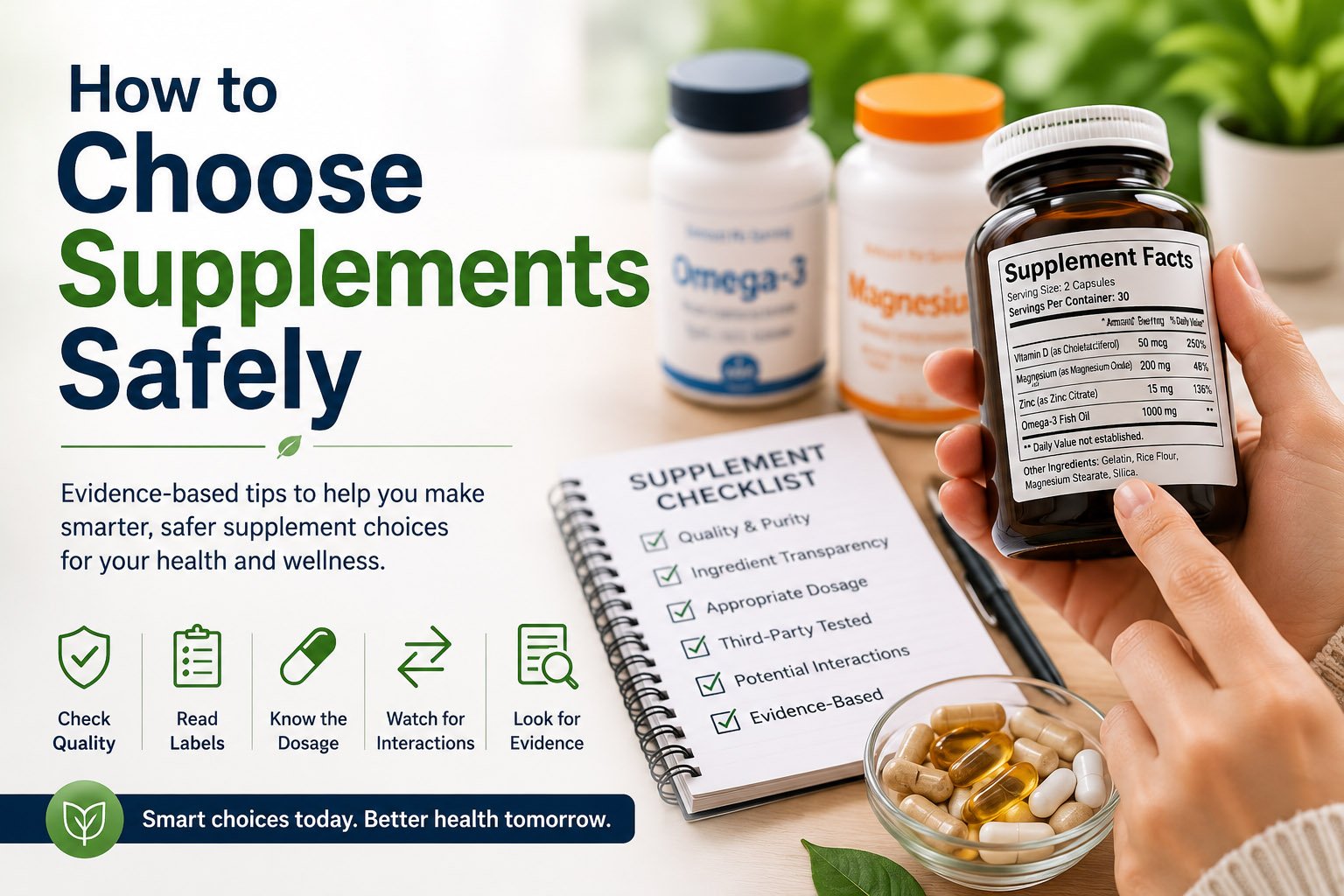
How to Choose Supplements Safely
VitaCoreBalance Editorial Team | Research-based health content • Editorial review process | May 2026
The supplement industry has grown rapidly in recent years, with millions of people using vitamins, minerals, herbs, probiotics, and other wellness products to support health goals such as sleep, energy, immune function, metabolism, and cognitive performance.
While some supplements may provide benefits in specific situations, choosing supplements safely is essential. Not all products are equally effective, properly tested, or appropriate for every individual.
Understanding how to evaluate supplements, recognize misleading claims, and avoid unnecessary risks can help consumers make more informed decisions.
For a broader overview of evidence-based supplementation, visit Supplements and Health Optimization: Evidence-Based Approaches.
Why Supplement Safety Matters
Many people assume that products labeled as “natural” are automatically safe. However, supplements can still:
-
Interact with medications
-
Cause side effects
-
Contain inaccurate ingredient amounts
-
Include contaminants or undeclared substances
-
Be inappropriate for certain medical conditions
Some supplements may also be unnecessary if dietary intake and lifestyle habits already meet nutritional needs.
The goal should not be to take as many supplements as possible, but to identify whether supplementation is appropriate and potentially beneficial for a specific situation.
You can also explore When Supplements May Be Helpful for additional context.
1. Understand Your Health Goals First
Before purchasing any supplement, clarify the reason for considering it.
Common goals include:
-
Improving sleep quality
-
Supporting metabolic health
-
Addressing low energy or fatigue
-
Supporting heart health
-
Supporting immune function
-
Enhancing cognitive performance
-
Improving digestive health
Different goals require different approaches, and supplementation is often only one part of a broader strategy involving nutrition, sleep, physical activity, stress management, and medical evaluation.
Explore related health categories:
2. Avoid Unrealistic Claims
Be cautious of supplements promoted as:
-
“Miracle cures”
-
“Instant fat burners”
-
“Detox solutions”
-
“Guaranteed results”
-
“Scientifically proven to cure disease”
Health outcomes are usually influenced by multiple factors, including genetics, nutrition, physical activity, sleep, and medical conditions.
Reliable supplement information typically discusses:
-
Potential benefits
-
Possible limitations
-
Side effects
-
Dosage considerations
-
Evidence quality
-
Individual variability
Balanced educational content is usually more trustworthy than exaggerated marketing language.
3. Look for Third-Party Testing
One of the most important safety considerations is product quality.
Third-party testing may help verify that products:
-
Contain the listed ingredients
-
Match stated dosages
-
Are screened for contaminants
-
Meet manufacturing quality standards
Independent certification organizations may include:
-
USP
-
NSF
-
Informed Choice
-
ConsumerLab
Third-party verification does not guarantee effectiveness, but it may improve confidence in product quality and label accuracy.
4. Check Ingredient Transparency
Reliable supplements should clearly list:
-
Active ingredients
-
Dosages
-
Serving sizes
-
Additional ingredients
-
Allergen information
Be cautious of:
-
“Proprietary blends” without exact amounts
-
Extremely high doses
-
Long ingredient lists with little explanation
-
Hidden stimulants
Some products combine many compounds in small amounts that may not align with evidence-based dosages.
5. Understand That More Is Not Always Better
High doses of certain supplements may increase risks rather than benefits.
Examples include:
-
Excess vitamin A
-
Excess iron
-
Excess selenium
-
Excessive stimulant intake
-
High-dose fat-soluble vitamins
Some nutrients can accumulate in the body over time.
Following evidence-based dosage ranges and consulting healthcare professionals when appropriate may help reduce unnecessary risks.
Related reading:
6. Consider Possible Interactions
Some supplements may interact with:
-
Prescription medications
-
Blood pressure medications
-
Diabetes medications
-
Anticoagulants
-
Antidepressants
-
Sleep medications
Examples include:
-
Melatonin potentially increasing drowsiness when combined with sedatives
-
Garlic extract potentially affecting blood clotting
-
St. John’s Wort interacting with multiple medications
-
Potassium supplements requiring caution in some cardiovascular conditions
People who are pregnant, breastfeeding, elderly, or managing chronic diseases should be particularly careful with supplementation.
Related articles:
7. Focus on Evidence-Based Supplements
Some supplements have more scientific research behind them than others.
The strength of evidence may vary depending on:
-
The health condition
-
Dosage used in studies
-
Population studied
-
Product quality
-
Duration of use
Examples of widely studied supplements include:
Sleep Support
Metabolic Health
Gut Health
Brain Health
8. Pay Attention to Side Effects
Even commonly used supplements may cause side effects in some individuals.
Possible effects may include:
-
Digestive discomfort
-
Headaches
-
Sleep disturbances
-
Dizziness
-
Changes in blood pressure
-
Allergic reactions
Starting with lower doses and monitoring response may help identify tolerance issues.
Stopping supplementation and seeking medical advice may be appropriate if unusual symptoms occur.
9. Supplements Should Complement — Not Replace — Healthy Habits
Supplements are generally most effective when combined with broader lifestyle strategies.
Key foundations of health still include:
-
Balanced nutrition
-
Sleep quality
-
Physical activity
-
Stress management
-
Smoking avoidance
-
Medical care when needed
Related reading:
Questions to Ask Before Buying a Supplement
Before using a supplement, consider asking:
-
What is my actual health goal?
-
Is there scientific evidence supporting this ingredient?
-
Is the dosage clearly listed?
-
Has the product been third-party tested?
-
Could it interact with medications or conditions?
-
Am I using it to complement healthy habits or replace them?
-
Would lifestyle changes address the issue more effectively?
Final Thoughts
Supplements can play a role in wellness strategies for some individuals, but safe and informed decision-making is important.
Choosing supplements carefully involves evaluating product quality, scientific evidence, dosage, interactions, and personal health needs rather than relying on marketing claims alone.
An evidence-based and cautious approach may help reduce risks while improving the likelihood of meaningful benefits.
For additional supplement education and evidence-based wellness topics, explore: